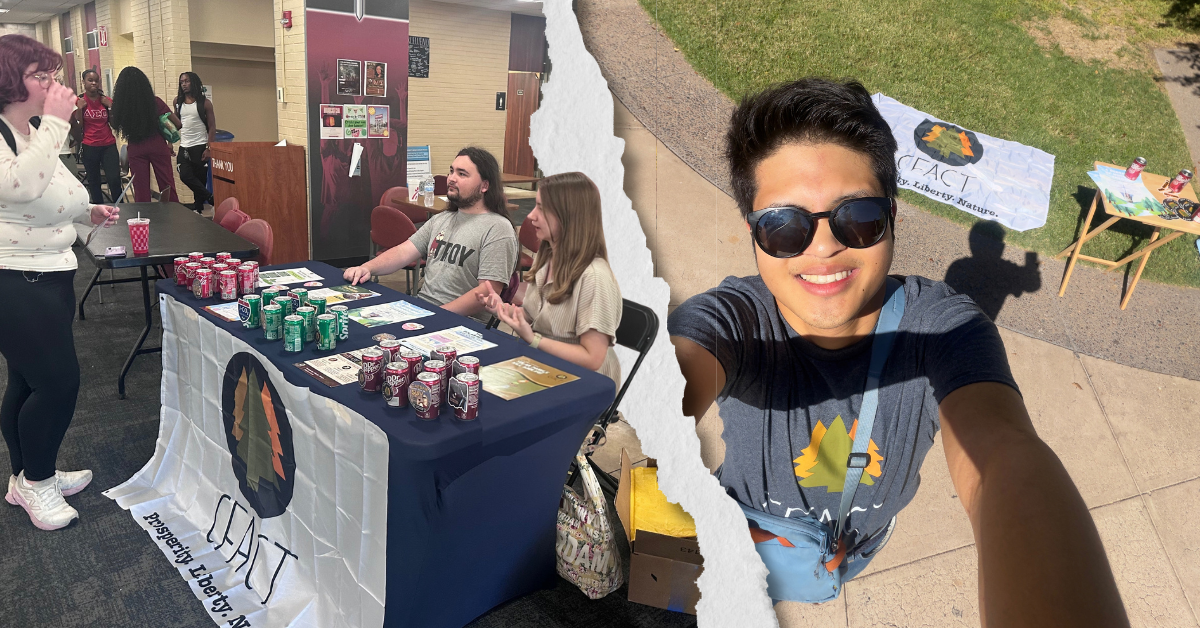
Campus life has its usual free-food moments. This one came with a radioactive spin.
Collegians at Troy University and Arizona State University created the perfect stage to get students talking about one of America’s most powerful energy sources—nuclear.
At the Radioactive Soda Giveaway, a table full of soft drinks became a hotspot for a refreshment and a quick nuclear reality check. With colorful cans lined up and nuclear-themed stickers on display, the setup was hard to miss.
Before grabbing a cold can of soda, students were asked a nuclear energy trivia question. From nuclear plants’ reliability and minimal land use compared to renewables to spent fuel and why those infamous cooling towers really aren’t that scary, each question gave Collegians an opportunity to clear up common misconceptions and share a few facts about how nuclear power actually works.
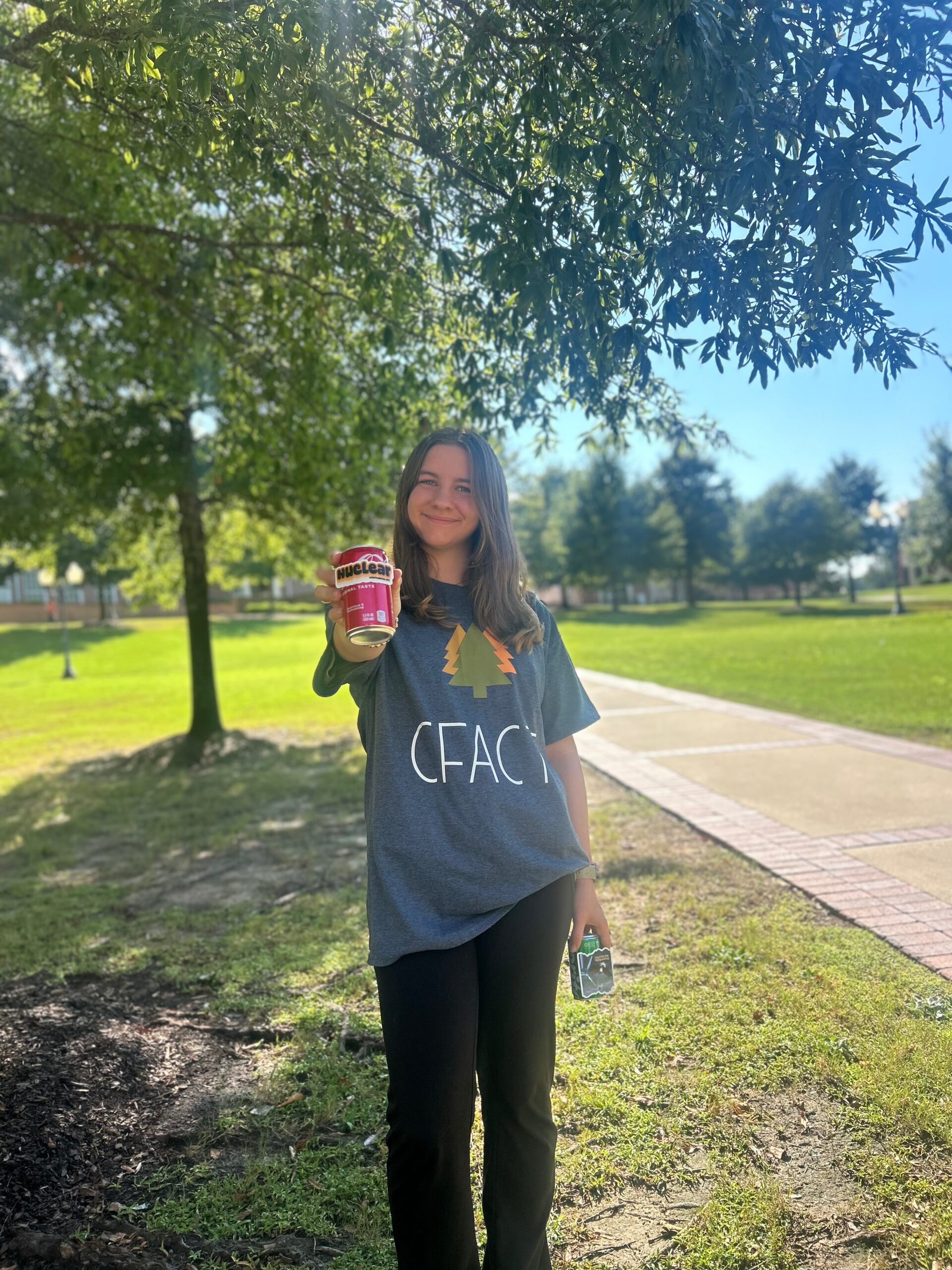
Troy University Collegian Vivian Chamberlin shows off a soda with a nuclear twist.
So, what does a can of soda have to do with nuclear power anyhow?
More than you might think. Collegians used the can as a visual to put nuclear waste into perspective. If all the electricity a person used throughout their entire lifetime came from nuclear power, their share of the radioactive used fuel could fit inside a single soda can—incredible!
At Troy University, CFACT Collegian Vivian Chamberlin brought the giveaway straight to the heart of campus life, setting up in the Trojan Center near the food court. Students looking for something cold to wash down their lunch could stop by her table and grab a soda covered in nuclear-themed stickers.
Arizona State students put their nuclear knowledge to the test before grabbing a cold soda and a nuclear flyer.
Meanwhile, at Arizona State University, Collegian Ian Hsu set up his giveaway booth in no better spot than under the hot desert sun—the perfect place to grab an ice-cold drink on the way to class. Ian was pleasantly surprised to find that many of his peers were already familiar with and supportive of nuclear energy, with several students getting the trivia questions right.
And no, a wrong answer didn’t cost anyone their Dr. Pepper.
“Many already knew quite a bit about nuclear topics, which was encouraging to hear,” Ian said. “It was rewarding to help answer questions, clarify points, and hand out soda—especially since that came after they responded.”
By the time the last can left the table, students walked away with a cold drink and a better understanding of the power behind nuclear energy. The cans may be empty, but the conversation they started is still fizzing.