
- We have taken the seasonal numbers down a bit.
- The main development region should see near-normal activity.
- In-close development is going to be a headache.
- The chief analogs for the rest of the season are 1954, 1960, 1985, 2016, and 2018.
Seasonal Forecast (includes those named already)
Named Storms: 14-18
Category 1 or greater hurricanes: 6-8
Major Hurricanes: 2-3
ACE Index: 105-135
ACE/Storm: 7-8
U.S. Coast Impact Forecast (includes Chantal)
Named Storms: 4-6
Hurricanes 2-3
Major Hurricanes 1-2
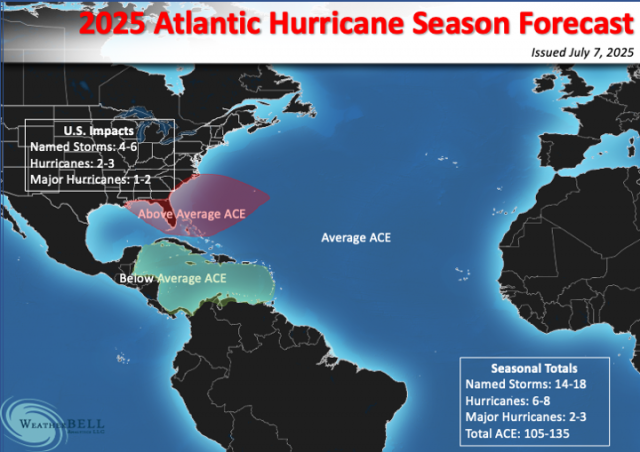

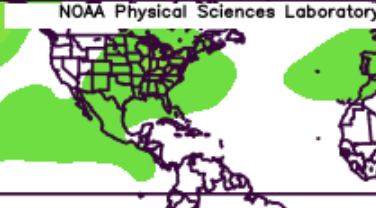
The red area is expected to see more than 50% over the expected average, while the Caribbean green area should see less than 50% of the average. Other areas should see near-average activity.
The changes mainly reflect looking at what we have seen so far this summer with the overall pattern over North America, which is strongly distorted due to higher than average temperatures and 500 mb heights across the North and the negative underneath moving farther back to the west toward Texas. This implies that a scattershot season is still a good idea with more ACE, relative to average, away from the main development region. A look at the analog years reveals an equal spread along the coast, though I am partial to focusing on the Southeast again.
Sea level pressure for August-October in the chief analog years:
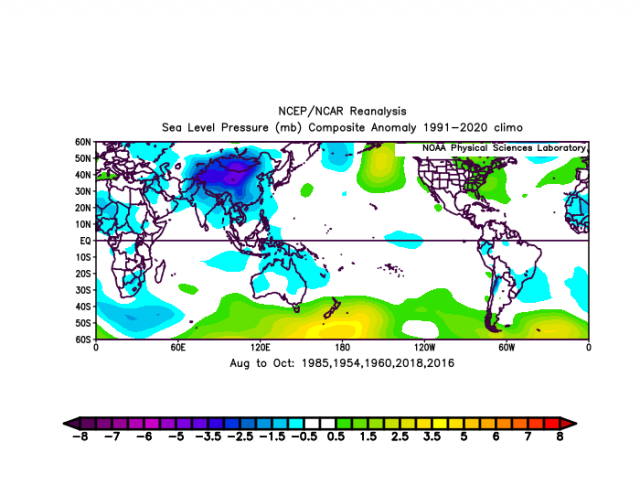

The Euro’s Sea Level Pressure pattern is similar:
.png)

The Atlantic Basin SSTs in those years (adjusted for warming):
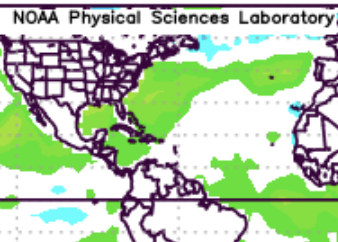

The Euro forecasted SSTs:
.png)

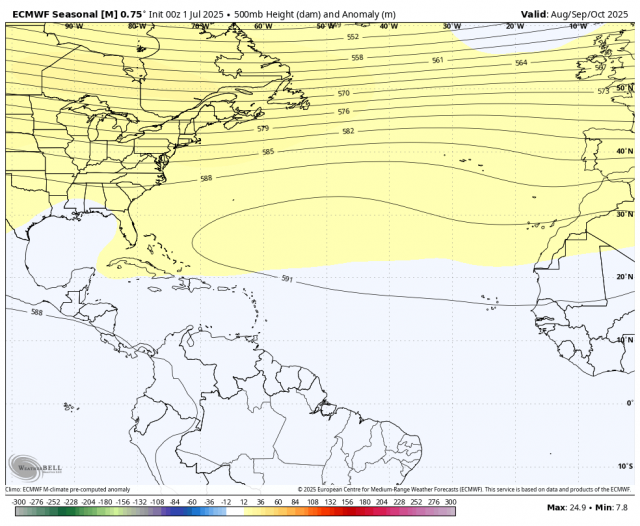
The Euro’s 500 mb pattern:

Analog:

The Euro precipitation forecast near North America in August-October:
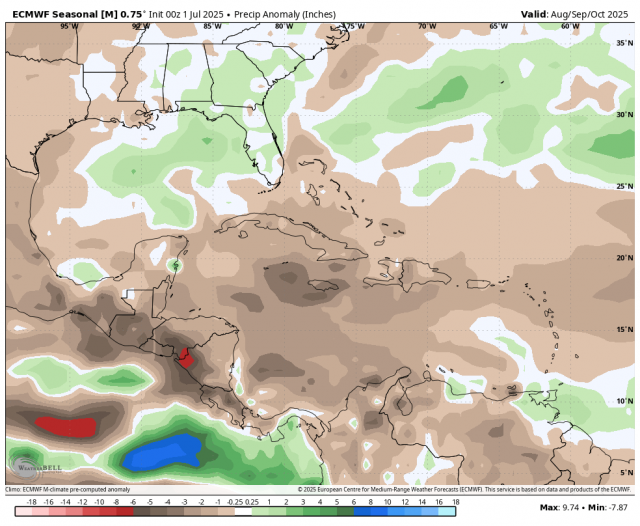

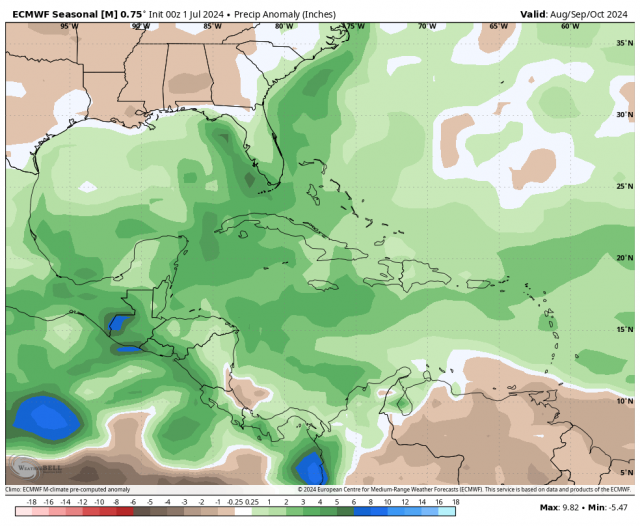
That is vastly different than last year’s forecast:

A look at the analog seasons still includes 1954. There were similarities in May this year to 1954, so that might be tested. The first three analogs are, of course, not as recent as 2016 and 2018. If we look at those years, you can see all of the development away from the main development region.
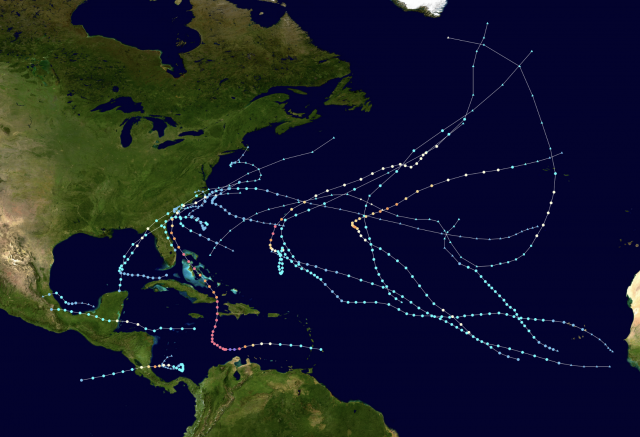

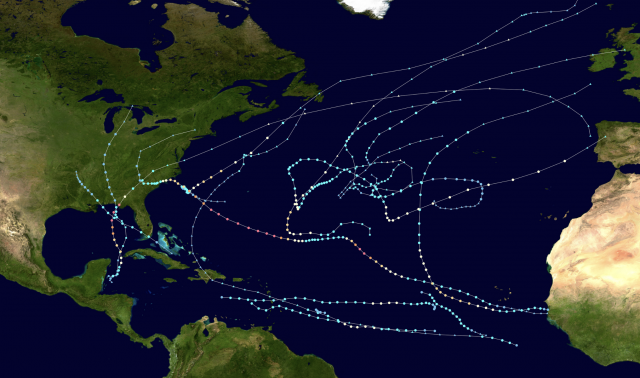

Of all those storms, only Matthew got strong to the south of 22.5°N. So, the impact idea now focuses from Louisiana to the Carolinas, but we can’t rule out storms breaking out of the pack up the East Coast or westward to Texas. We are pulling the above-average area closer to the U.S., with below-normal conditions in much of the Caribbean. The warmth of the water ups the ante for in-close feedback, something that has become more common in the age of water warming farther to the north. Smaller-in-size, rapid ramp-up systems within 2 days of the coast are what to watch for.
The Verdict
The total numbers have been taken down from our first two seasonal forecasts. The main development region should see near-normal activity, but most of the threats to the U.S. will be from in-close developments.