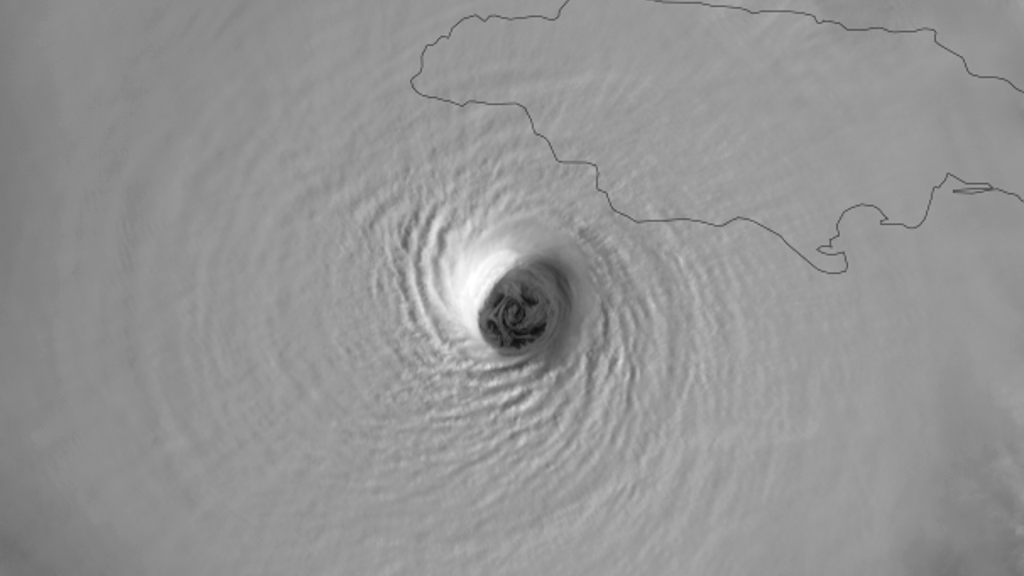
It’s a dirty job, but someone has to do it. I waited till Melissa was over, so the noise that was flooding the media diminished, and we can add perspective
Was Melissa a surprise? Yes and no. The yes part to me is that IT DID NOT FORM FARTHER WEST FROM WHAT I WAS CONCERNED ABOUT FOR THE ENDGAME AND COME UP THROUGH THE YUCATAN CHANNEL AND HIT FLORIDA. The fact is that the seasonal impact idea was centered east of what I thought at the beginning of the season. So, the U.S. was spared hurricane hits, but unnamed systems took up the slack for the Carolinas, where a total of 16 homes have collapsed into the ocean due to three unnamed features and two that were named and had actual tropical storm warnings. To put that into perspective, Hurricane Irene in 2011, which made direct landfall, had no collapses, and Isaias in 2020 had none as well. The cumulative pounding this year took its toll.
As far as the intensity of Melissa, no.
These tweets from Oct. 22 outlined the threat.
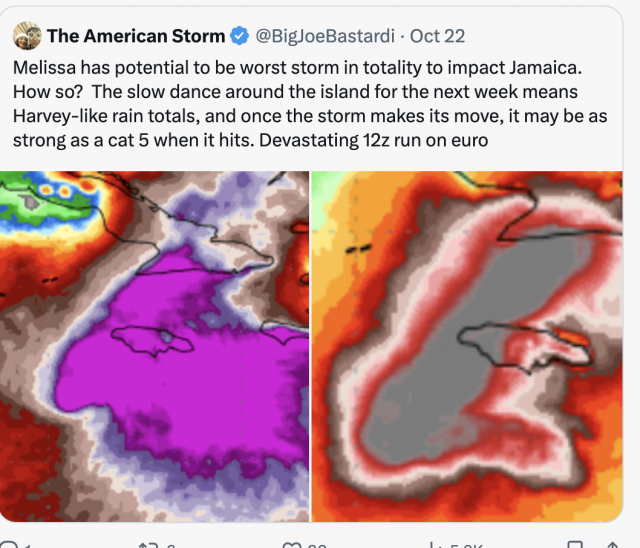

From 6 days out, in the long and storied history of Jamaican hurricanes, that was an extreme forecast.
The hurricane model was on top of it.
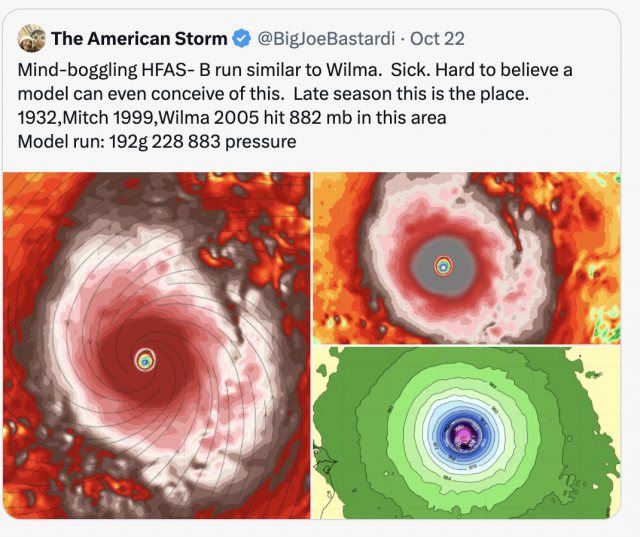

In fact, I had been calling for this kind of endgame storm since September, but again, I thought the track would be farther west. But it’s all there to see and is in line with a lot of late seasons since we entered the warm cycle of the Atlantic. It was also a testimony to the prowess of our power and impact scale, where size matters.
The 185-mph wind was a spot wind, and hurricane-force winds never extended out more than 25 miles. Contrast that with some of the great storms of the past, or even the illustration in the link below of Sandy.
https://www.weatherbell.com/power-amp-impact-scale—2025-update
I won’t bore you again with the details.
But the storm illustrated several things I have been saying about using events like this to push a climate agenda, be it what I believe or the opposite. I kept trying to tell my friends that downplaying this season was a cherry-pick that should not be used. The above damage to beaches in the Carolinas, just because a storm was not named, illustrated the storminess that the season was going to have in the western Atlantic. Suppose they named all of them; then the other side uses it for the opposite. Again, there were more house collapses this year than in years with two landfalling hurricanes in the Carolinas since 2011. The collapses were going to happen eventually. The idea that you can build on barrier islands and expect a permanent structure ignores the fact that, when it comes to nature, it’s pay me now or pay me later. But, of course, the other side will cite that as evidence they are right. In reality, it’s nature being nature, and people trying to push their point without perspective.
The second reason is the beast we just saw. Imagine if it had hit the U.S.
Which comes around to the whims of the CO2 fairy. How is it that this is working so well in the Atlantic basin, but the Pacific basin, with WARMER WATER, even in relation to averages, is having a bottom 10% ACE year? What kind of magic power does 3% of the speck (man’s contribution) of CO2 have
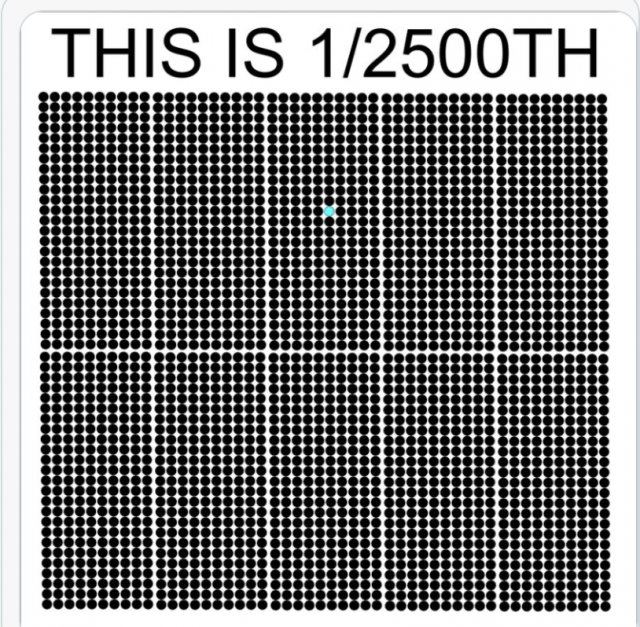

where it can dictate that one basin, which has almost three times the average ACE of another, is so far down that someone can conclude and push this:
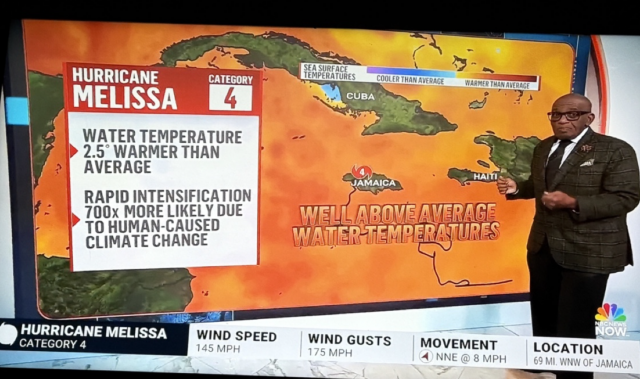

Rapid intensification is 700 times more likely? Well, why not in the Pacific Basin? How do you even repeat that? How then does one explain what happened in the 1930s with hurricanes? The Labor Day hurricane of 1935 had a SLP of 892 mb ACTUALLY MEASURED ON LAND, NOT RECON, and 36 hours before was only a tropical storm. Melissa took three days to become a hurricane, but when it got into the area that we all were saying was ripe, it did what it was supposed to do. How do people spewing this not even know about the 1932 hurricane in the same general area at the same time of year, that was a Cat 5 FOR 78 HOURS!?
.png)

When was the last time Blue Hill, Massachusetts, had a 5-minute sustained wind of 121 with a gust to 186 mph? Or NYC was gusting over 100 mph with a storm that was 150 miles to its west (Hazel, 1954)? Kingston, Jamaica, 75 miles east of where Melissa hit, had gusts to only 59 mph, with max sustained wind at 47 mph.
When do you ever see anyone bring these kinds of things up to put a storm into perspective? Never, because it would expose a missive.
This all has to do with the natural ebb and flow of where the atmosphere is redistributing heat. A look at SST shows the WPAC has more heat content than the Atlantic.
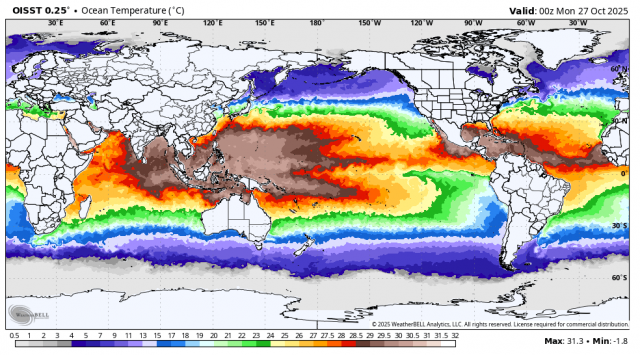

So why is it that, in the last 20 years, the ACE index in the WPAC, again, the biggest bang-for-the-buck basin, has been so far below average?
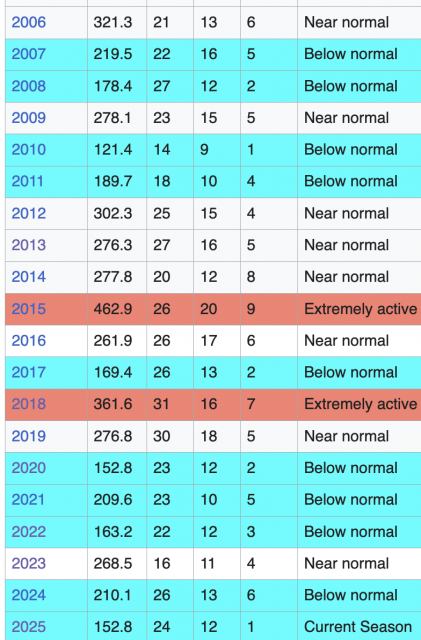

While the Atlantic is up?
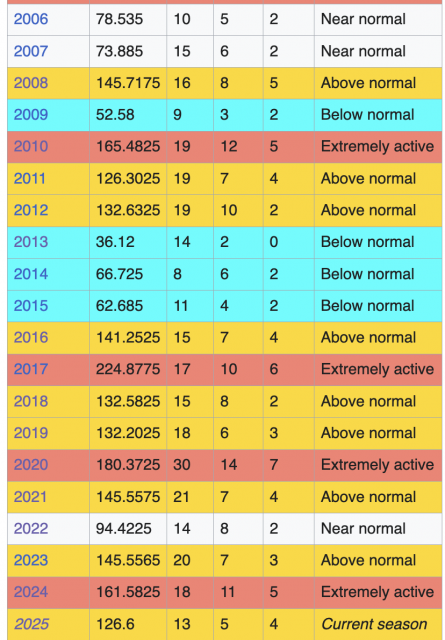

And since one can argue this is climate change, how in the world would CO2 be responsible for making the biggest, warmest ocean LESS ACTIVE, while the other basin is more active?
The answer, of course, is that it’s not man-made. It’s a product of large natural cycles that overwhelm man’s contribution, and, arguably, given the “We are the World” global concern of all these activists, is better for the planet because more people live in harm’s way from typhoons than hurricanes.
What I can’t figure out from the media is why you simply parrot things without doing a true deep dive into the whole picture. If you simply say what everyone else says, what makes you special? If you want the whole truth, you have to look at the whole picture, not just one storm in a pattern that was dictating we should look out for this from well before.
If anything, be thankful it was so small in size, as many of these have been. When storms like Melissa come along, those of us who love and cherish the weather look at them and say, why shouldn’t this happen, not, how is man making this happen. One has to be pretty arrogant and ignorant to think that man somehow can dictate the weather and climate. I say ignorant in a loving way — you are not looking at the entire picture. I say arrogant because thinking that we can control nature seems pretty arrogant to me.