The media has been awash with indignant stories about the Department of Interior’s recent order halting further construction for the Virginia Wind project. The grousing by opponents runs the gamut from “arbitrary and capricious” to “illegal and unconstitutional” to “spiteful and retaliatory.”
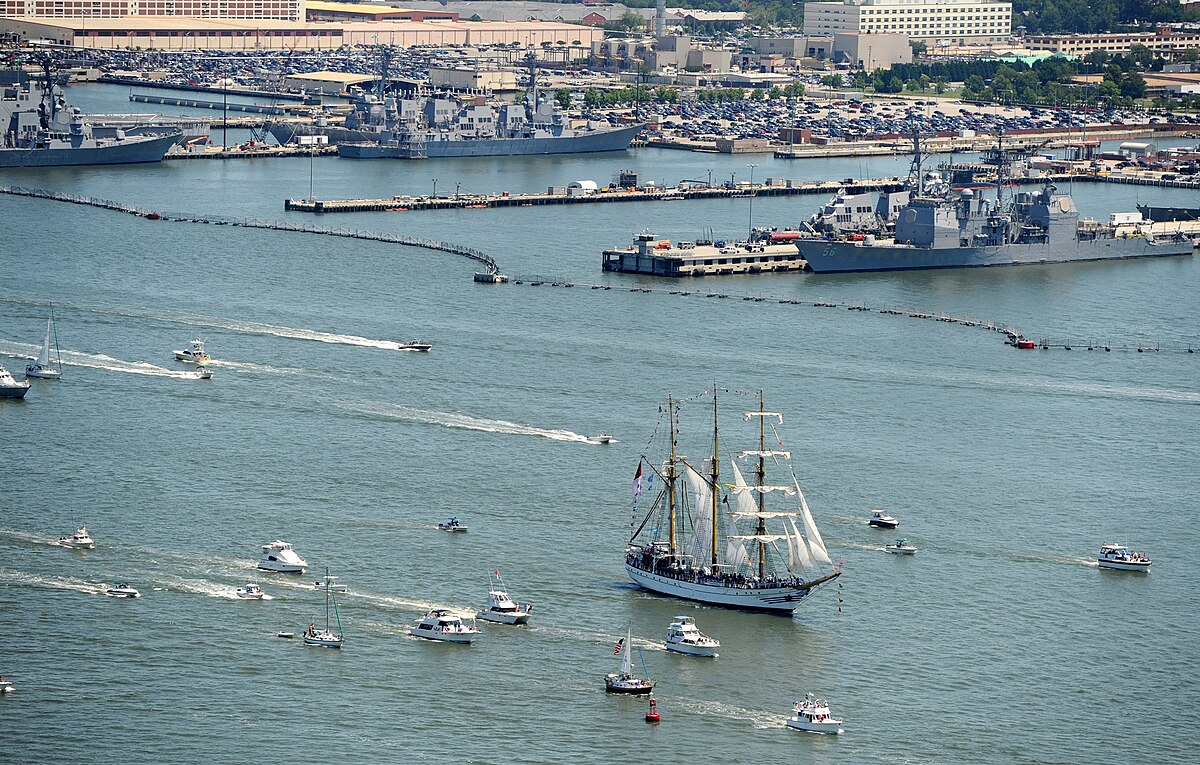
But what is missing from all this noise is an understanding of the long history of the Pentagon’s objections to any and all industrial development of the ocean waters lying off Norfolk, VA — the home of the largest military complex in the world. These objections have included resistance to both oil and gas exploration as well as offshore wind.
The Pentagon’s objections to any kind of commercial development in the waters off the Norfolk Navy Base began several decades ago. Former Virginia Governor Bob McDonnell was particularly eager to promote oil and gas exploration off Virginia’s coast. This prompted the Navy to issue two classified reports in 2010 and 2015 that vigorously objected to oil and gas exploration adjacent to the Norfolk naval base. Further efforts to advance oil and gas exploration died a relatively quick death in the face of this military opposition.
After the Outer Continental Shelf Lands Act (OCSLA) was amended in 2005 to authorize offshore wind development, the Pentagon once again issued a report in 2017 objecting to any wind energy construction in 94% of the ocean waters off Norfolk. This report was reinforced by another report in 2022, which further dismissed offshore wind as incompatible with military operations. Both of these Navy reports were classified, and the precise national security liabilities have remained sealed. But the ultimate conclusion was not — offshore wind development of any size in federal waters off Norfolk posed unacceptable risks to national security.
But then, the Obama and Biden administrations arrived with their zeal for renewable energy. They started pressuring the Navy to retract its objections to offshore wind. The result was the emergence of the Commercial Virginia Offshore Wind project, which Dominion Energy eagerly embraced both as a means of pacifying the green energy lobby and also of deriving extravagant profits from a bloated, expensive asset base.
However, the location of Virginia Wind off the coast of the Norfolk Naval Base violated the preexisting Navy reports. Accordingly, the Construction and Operations Plan (COP), approved by the Bureau of Ocean Energy Management (BOEM) for Virginia Wind, required Dominion Energy to enter into a series of “mitigation agreements” with the Navy to ameliorate its national security objections. But because BOEM knew that the Navy might not agree to these mitigation measures, it included in the COP a provision which stated that BOEM “reserved the right … in its sole discretion” to override these concerns. All that Dominion had to do was attempt to obtain Navy approval. That effort alone, even if unsuccessful, would be enough justification for BOEM to greenlight the construction plan anyway.
Despite this strong-arming, the Navy continued to fight back. It dug in its heels so adamantly that the Biden administration was forced to concoct a bizarre document, published just one week prior the 2024 presidential election, called a “Memorandum of Cooperation.” This agreement between BOEM and the Navy compelled the Navy to “cooperate” with BOEM and to drop any future opposition during the second term of the Biden administration. Of course, there was no second term, and the Trump administration promptly rescinded the Cooperation Memorandum within a few months after its inauguration.
So where does this leave the situation now?
The Code of Federal Regulations, OCSLA, and the terms of Virginia Wind lease and COP clearly give BOEM the power to suspend Virginia Wind based on national security considerations. Even so, Dominion Energy has filed suit against the Department of Interior in U.S. District Court, claiming the pause is “arbitrary and capricious.” However, since this is a contractual dispute between the Government and a vendor — Dominion Energy — the U.S. Court of Claims has exclusive jurisdiction to hear the case, not the Federal District Court. The Court of Claims does not issue injunctions, so unless the case is settled, a trial on the merits will proceed while construction is halted.
Since most of the national security grounds for the suspension are classified, the public may never know the details and specifics behind the order. Unclassified reports suggest that wind turbines would create “clutter” that interferes with military radar. But it is obvious that there are more worrisome liabilities against military preparedness than just radar clutter. In any event, the days when renewable energy zealotry topped national security have come to an end.
The Virginia Wind project will finally receive the same, honest assessment of its potential impact on national security as oil and gas did several decades ago.
And the results may very well be the same.
U.S. Navy image