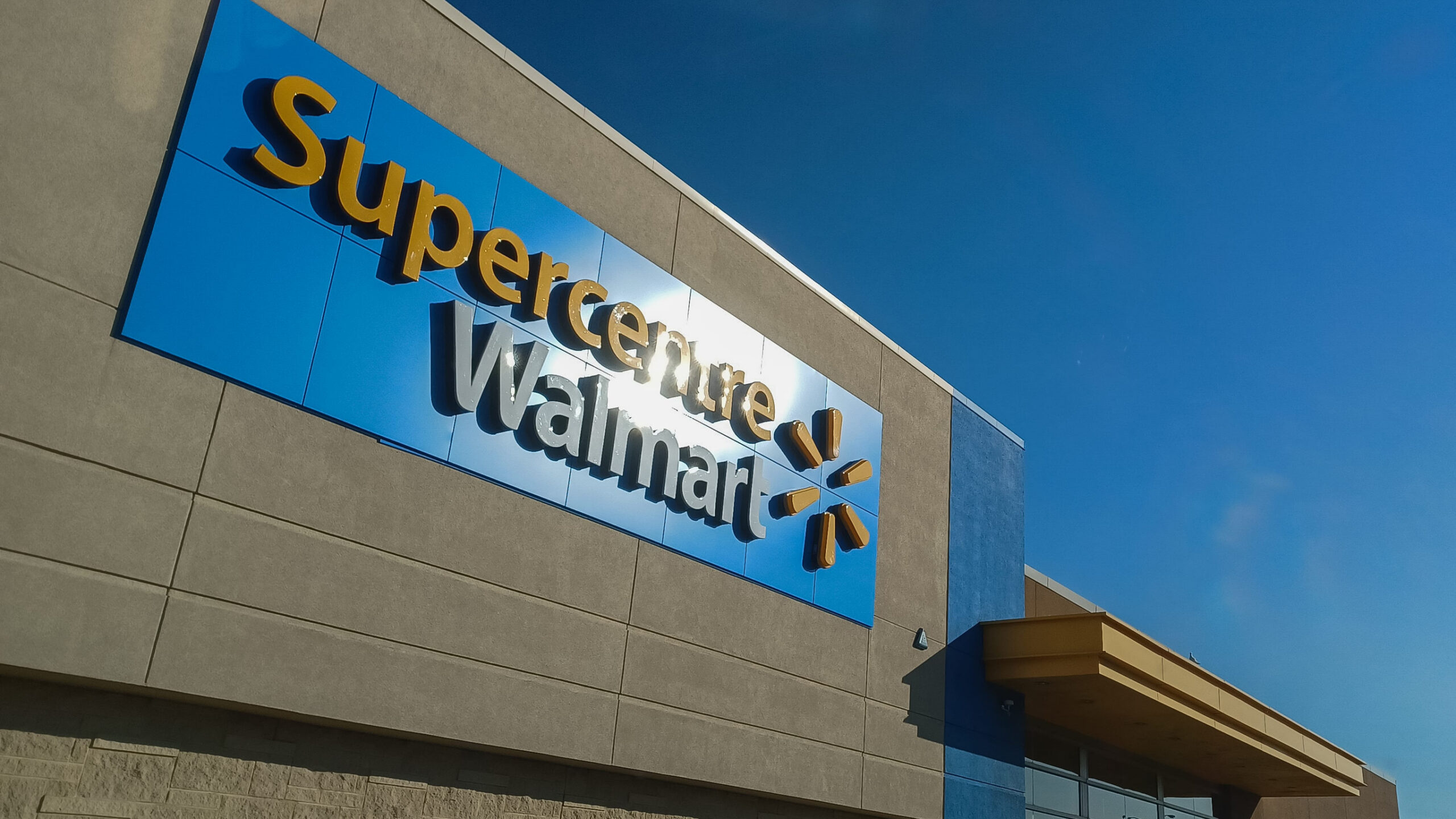
At Walmart’s 2026 annual shareholder meeting, CFACT’s National Collegians Director Nate Myers pressed the company over whether its charitable giving and public-policy engagement advance shareholder value or ideological priorities.
Myers asked: “Walmart’s 2026 Proxy Statement says public-policy engagement follows its ‘shared value approach,’ while the Nominating and Governance Committee oversees charitable giving, lobbying, and trade-association activity. What safeguards are in place to prevent shareholder money from funding ideological campaigns like climate change activism rather than non-partisan charitable activity?”
The question drew from Walmart’s 2026 Proxy Statement, which says the Nominating and Governance Committee reviews legislative affairs, public-policy engagement, and charitable-giving strategy, and that Walmart’s public-policy engagement is guided by its “shared value approach.”
Shareholder corporate governance, as conservatives and libertarians see it, holds that a company’s primary duty is to maximize long-term value for its owners—the shareholders—by generating profits within the rules of law and basic ethics (per Milton Friedman’s classic view). This respects private property rights, voluntary contracts, and market discipline, with executives acting as fiduciaries accountable to those who bear the financial risk.
Stakeholder governance (a.k.a “shared value approach”), by contrast, expands corporate obligations to a broader set of “stakeholders” like communities, woke activists, or environmentalists who don’t actually financially contribute to the company, but can benefit from charitable giving or other perks at the expense of owners (shareholders). Conservatives and libertarians view this as a form of soft socialism that dilutes accountability, empowers special interests, offends free speech, and undermines the efficiency and innovation that arise from focused profit-seeking.
Kathleen McLaughlin, Walmart’s Executive Vice President and Chief Sustainability Officer, answered for the company. Rather than identify safeguards preventing ideological giving, McLaughlin defended Walmart’s philanthropy as “shared value,” meaning value for customers, associates, suppliers, and communities.
That answer matters because Walmart’s own documents show the phrase is not limited to neutral charity or direct shareholder return. Perhaps sensing Mr. Myers intent, McLaughlin shirked direct responsibility stating, “The leadership really starts with the CEO and the executive leadership team,” and adding their giving focuses on “helping to conserve the natural resources our products rely on” and creating “economic opportunity for people who work in value chains.”
What she didn’t mention is that Walmart’s own annual report says its sustainability priorities include reducing greenhouse gas emissions, roping off natural resources from being properly utilized, reducing product and packaging quality by cutting corners in the name of recycling, and enforcing stakeholder ideology within its supply chains. The proxy likewise says the Nominating and Governance Committee oversees social, community, and sustainability initiatives, including climate change.
In other words, when Walmart says, “shared value,” it is not talking about values shared by shareholders across the political spectrum. It is talking about the shared values of the ESG and DEI agendas running rampant within pop culture and Walmart’s leadership.
Walmart and the Walmart Foundation’s charitable materials show how broad that agenda is. Their giving priorities go beyond local food banks and disaster relief, extending into greenhouse-gas reduction initiatives, restrictive land and ocean management goals, supply-chain pressure, climate-related policy work, and racial-equity activism.
There was also an obvious irony in Walmart’s choice of respondent. McLaughlin sidestepped concerns about ideological governance even though her own title as “Sustainability Officer” embodies that model. In corporate America, “sustainability” has become the eco-left’s preferred euphemism for climate targets, natural-resource restrictions, supply-chain pressure, and stakeholder governance. Her own about page on Walmart’s website openly notes that she was a former advisor to The Nature Conservancy, an organization dripping with climate alarmism. In addition, “she was also ranked #1 by Sustainability Magazine among their 2026 Top 250 Women in Sustainability. In 2023, Kathleen was named to Time Magazine’s inaugural “TIME100 Climate List,” recognizing the most influential climate leaders in business.”
The Walton Family Foundation is legally separate from Walmart and the Walmart Foundation, but its agenda remains relevant because the Walton name carries enormous influence inside the company and two family members still sit on the board.
The broader Walton philanthropic ecosystem shows a clear pattern of environmental and left-wing giving, including major support for Ocean Conservancy, National Wildlife Federation, National Audubon Society, Environmental Defense Fund, and Natural Resources Defense Council. It has also funded climate messaging through PBS NewsHour, NPR’s Climate Desk, Associated Press environmental reporting, and Good Energy Project’s effort to bring “climate storytelling to Hollywood.”
CFACT also supported Proposal No. 5, sponsored by ally National Legal and Policy Center, which called on Walmart to adopt cumulative voting for board elections. CFACT voted for the proposal because it would have given minority shareholders a stronger voice against entrenched corporate leadership. Unfortunately, it did not pass.
McLaughlin’s response did not reassure shareholders that Walmart’s charitable giving is politically neutral. It confirmed that Walmart’s philanthropy is part of a board-supervised stakeholder agenda.
Walmart can call that “shared value.” But for shareholders who do not share the company’s ideological definition of value, the phrase looks less like a business principle and more like a cover for corporate activism.