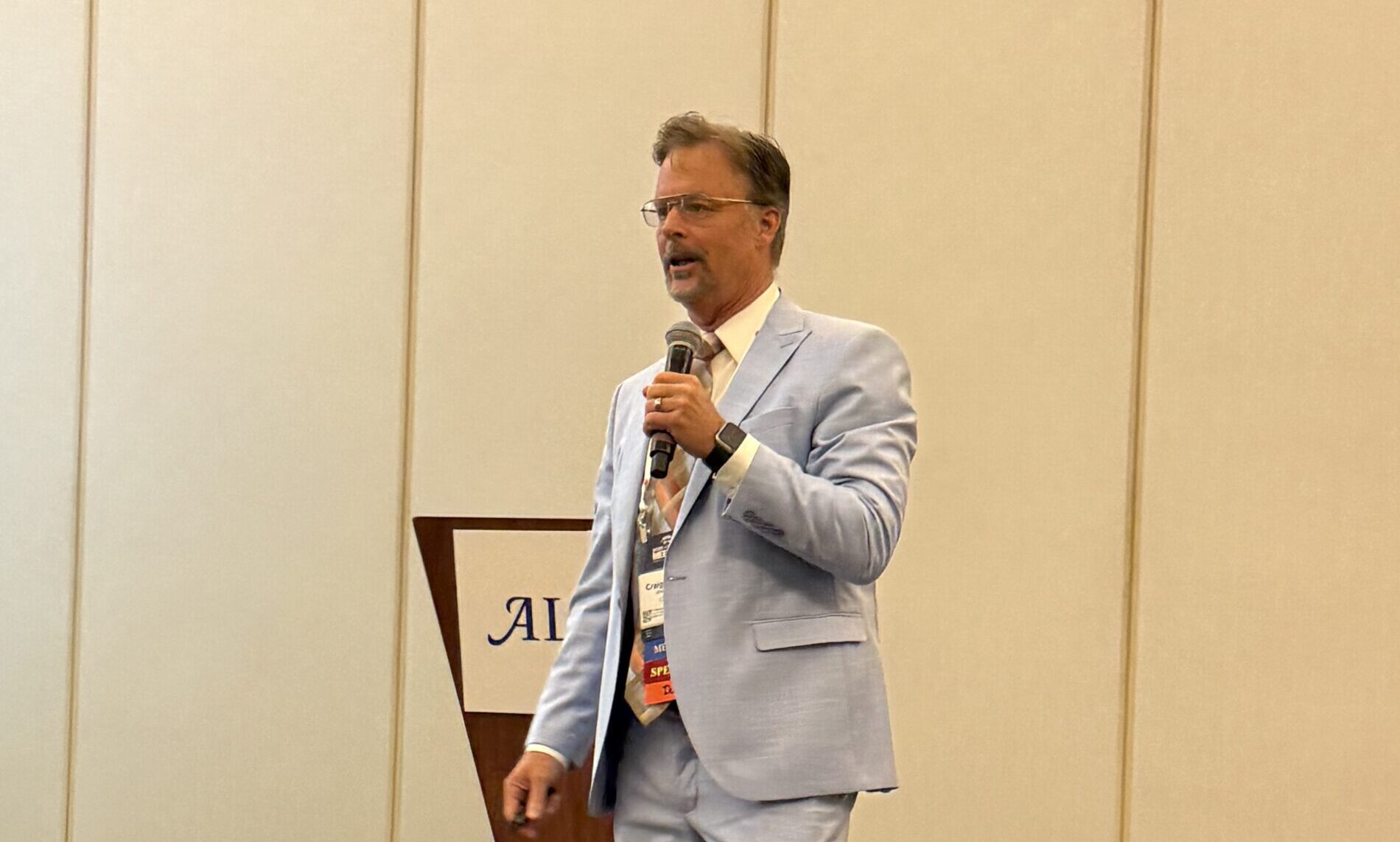

CFACT teamed up with the Heartland Institute to deliver a takedown of the Green New Deal’s energy policies during a “standing-room-only” side event.
The 52nd Annual Meeting of the American Legislative Exchange Council took place last week in Indianapolis, drawing together conservative and libertarian-minded state legislators from all 50 states. Prominent in this gathering was CFACT, which used the opportunity to sponsor four “model bills” and to make a presentation on the perils to the grid from green (solar and wind) energy.
Speaking before a packed chamber filled to “standing room only,” CFACT President Craig Rucker teamed up with the Heartland Institute’s president, James Taylor, to offer the attendees a takedown of the Green New Deal’s energy policies. The panel, hosted by energy expert Steve Milloy, was kicked off by Taylor who took aim at the shoddy science backing up the climate alarm theory and the exorbitant costs imposed by transitioning the grid from reliable to unreliable energy.
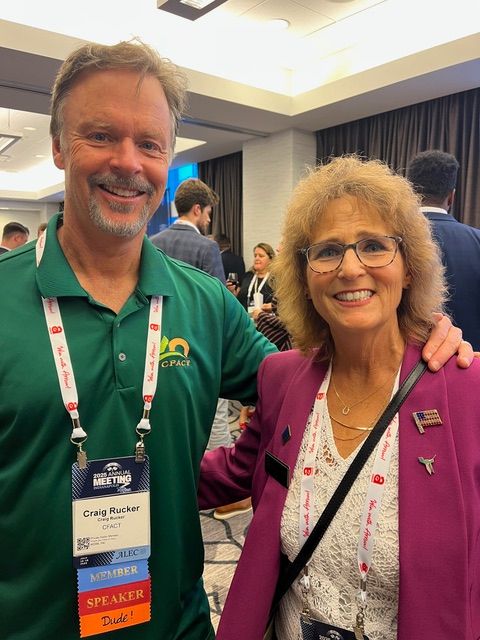
President Craig Rucker takes time to chat with New Hampshire State Representative Jeanine Notter about energy concerns in the Granite State.
After Taylor finished, Rucker then took up the microphone to expose the forces driving this change, namely the radical environmental movement and their allies in the UN and mainstream media. He then concluded his talk by urging ALEC members to distance themselves from an “all of the above” energy strategy. After they finished, Milloy moderated a Q&A segment of the presentation before it closed. As it ended, the audience gave a huge applause to all the speakers.
This memorable presentation was followed by a meeting of an “Energy, Environment, and Agriculture” task force on Friday, where CFACT had the opportunity to present four pieces of legislation. The first piece of legislation dealt with restricting “conservation easements” to no more than 20 years in duration, as opposed to “in perpetuity,” as they are currently configured. A second addressed the issue of PFAS pollution in and around solar farms. The third and fourth bills looked at measures to prevent the early closure of reliable fossil fuel plants and eliminate the advantages renewable energy enjoys over fossil fuels in the electricity market. None of the bills passed, unfortunately, on the first go round. However, all are either scheduled to be reviewed by ALEC’s executive committee or taken up for debate again in the fall. CFACT expects each of them to eventually get voted on and passed at future gatherings.
All in all, the ALEC meeting in Indianapolis proved to be a fruitful one for CFACT on many fronts. Business cards were gathered, connections made, legislators educated, and important ideas advanced. Expect to see CFACT continue its involvement in this important forum for years to come!
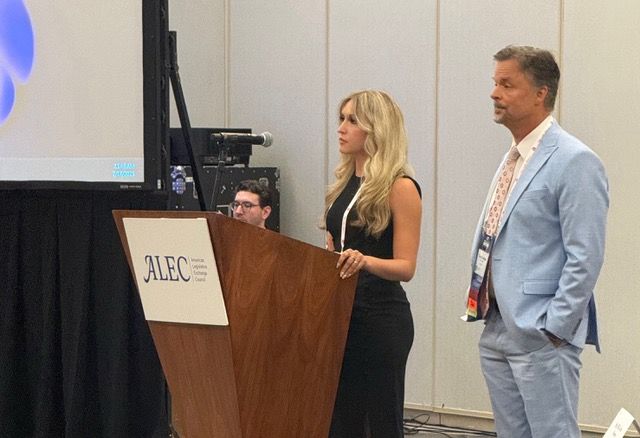
State Representative Reagan Paul introduces CFACT’s model bill to the Energy and Environmental Task Force and fields questions.