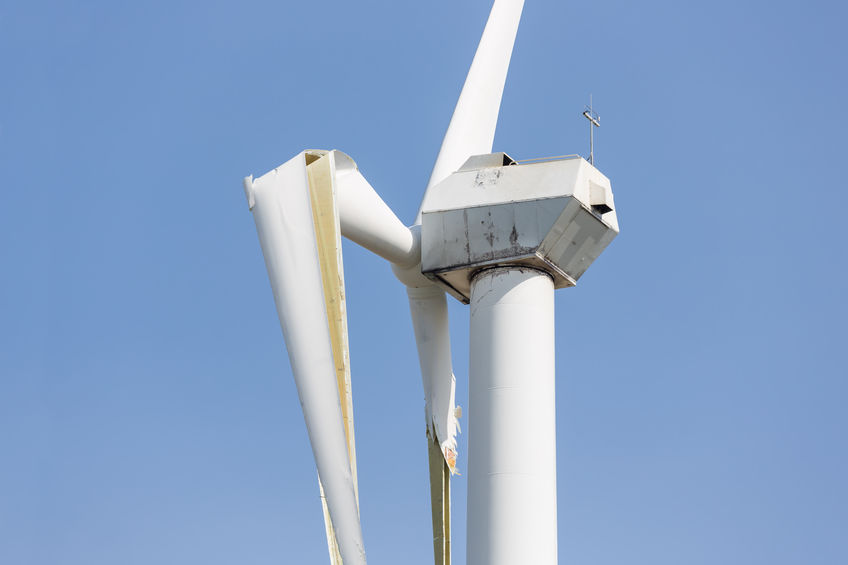
Long known as the nation’s leading producer of oil, Texas in recent years has also surged to the top of the heap in wind energy, with over 19,000 wind turbines operating in the state.
West Texas and the Panhandle have emerged as the gusty go-to places for putting the Lone Star State at the forefront of what was said to be America’s transition to clean energy. Ground zero for this enterprise is Sweetwater in Nolan County. Located 40 miles west of Abelene, Sweetwater is sometimes called the “Wind Turbine Capital of Texas.” But now the small city and its environs are experiencing the downsides of that distinction. It turns out that clean can be very dirty indeed.
In February, Texas Attorney General Ken Paxton announced his office was suing Global Fiberglass Solutions, Inc. and all affiliated entities for allegedly “dumping thousands of wind turbine blades and related materials at two disposal sites in Sweetwater, Texas,” KTAB/KRBC reported. The suit, filed on behalf of the Texas Commission on Environmental Quality, alleges the company failed to properly dispose of turbines it was hired to dismantle, transport, and recycle, resulting in the illegal stockpiling of over 3,000 turbine blades in Sweetwater. Some of the industrial waste abandoned in Sweetwater dates to 2017, prompting Paxton’s office to seek up to $1 million in civil damages.
“Illegal disposal of wind hurts our land and will never be permitted under my watch,” AG Paxton said in a statement. “Just because the radical left calls something a ‘green industry’ does not give any company a free pass to harm the Texas countryside, break our laws, and leave Texans to deal with the negative impacts.”
Sweetwater officials are bringing their own criminal charges against those they deem responsible for polluting their city. “Earlier this week, four individuals were indicted on criminal charges related to these wind blades. I hope this sends a distinct and clear message that individuals who think they’re going to dump in our community are going to be held accountable and there will be consequences,” City Manager Bryon Sheridan said in a Feb. 26 press conference.
Texas isn’t the only place that has had to cope with wind turbine waste. A thousand miles to the northeast, residents of Grand Medow, Minn. had to put up with 111 fiberglass turbine blades haphazardly dumped in their community for four years. Locals in the southern Minnesota town of 1,100 complained that the cavities of broken and stained turbines drew feral cats and foxes and posed a risk to children climbing on the junk, The Star Tribune reported. The mess unfolded in 2020, when renewable-energy developer NextEra Energy rebuilt a wind farm in Mower County but had trouble finding a company to recycle the discarded fiberglass blades.
Despite a growing chorus of complaints by locals, it was not until October 2024 that the blades were removed, and then only after the Minnesota Public Service Commission ordered NextEra Energy to clean up the site.
Even as the Trump administration gives wind power the cold shoulder, waste generated by the industry threatens to become a serious environmental problem. As noted by Ariel Cohen in Forbes, “wind turbines’ large blades are constructed from fiberglass, carbon fiber, and epoxy resin, rendering conventional recycling procedures ineffective.”
“Wind Turbine Graveyards”
Disposal of giant blades in landfills is often the only way to deal with equipment that is no longer serviceable. “Blades are frequently buried in fragments in several landfills throughout the Great Plains,” Cohen adds, “transforming sites in Wyoming, Iowa, and South Dakota into wind turbine graveyards. By 2050, the cumulative decommissioning material from wind turbines could reach 133 million tons. On average, 3,000 – 9,000 blades are being taken out of service per year in the United States, and that number is expected to increase to 10,000 – 20,000 blades per year by 2040.”
In other words, even in the absence of dubious corporate behavior as was seen in Texas and Minnesota, the environmental impact of industrial-scale wind facilities extends far beyond the operational lifespan of turbine blades and related equipment.
Another supposed source of clean energy, solar power, comes with its own waste-related baggage. Estimates from the U.S. Environmental Protection Agency project that by 2030, the nation could have as much as one million tons of solar panel waste on its hands. Citing what it says is a “tidal wave of solar e-waste,” the renewable energy company Solar N Plus notes that, “When sent to landfills, the toxic materials used in solar panels, such as lead, cadmium, and other heavy metals, can leach into the soil and groundwater, posing a public health risk.”
Small wonder that the vaunted transition to clean energy is encountering headwinds.