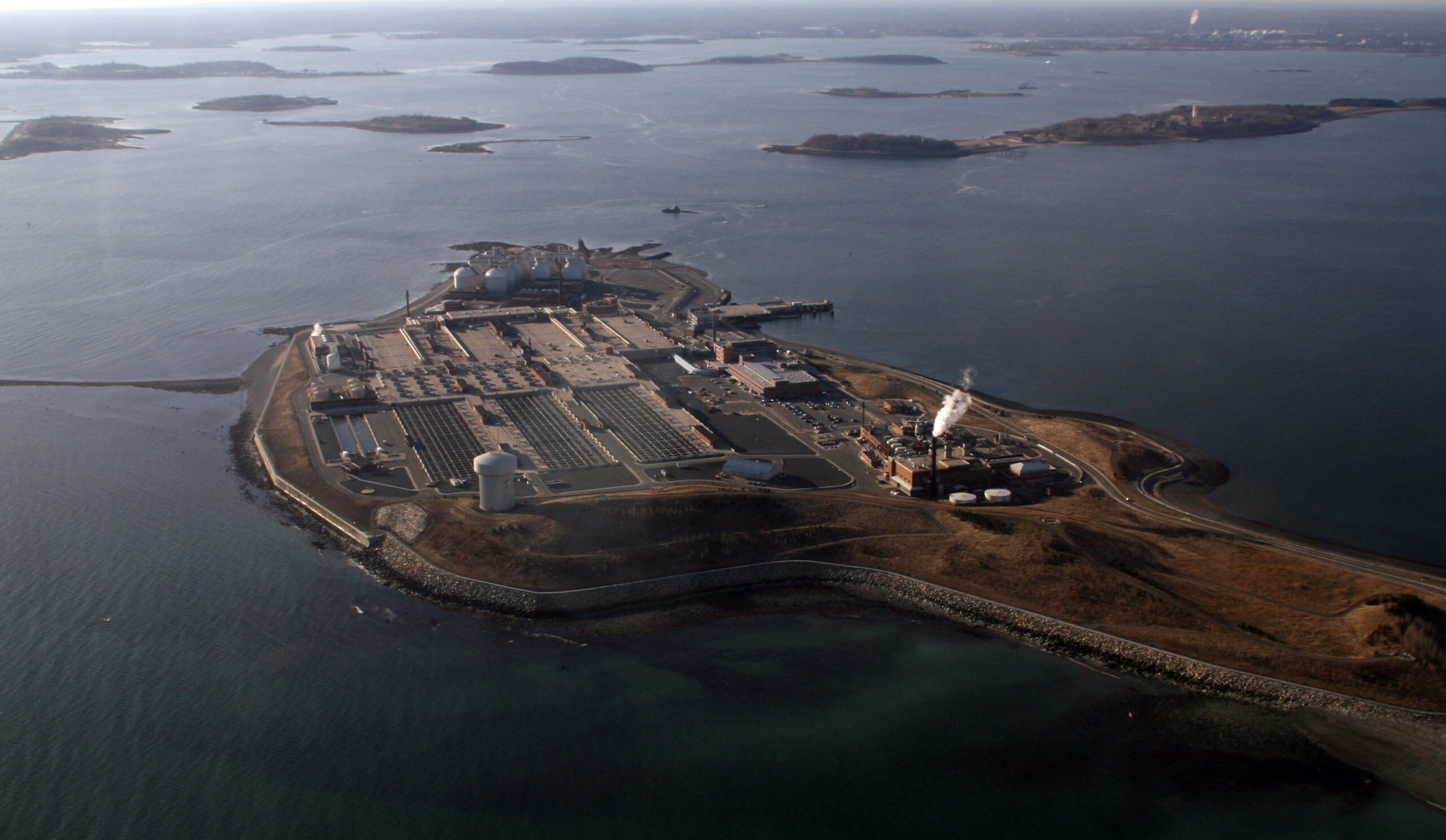
Imagine holding fragile assets worth a trillion dollars and letting them deteriorate to a point where their actual value is vastly diminished. America’s sewers — including nearly 17,500 wastewater treatment plants — are overall not being properly maintained.
Over the past decade alone, the renewal and replacement rate for large capital wastewater projects decreased from 3% to 2%, while the average number of collection system failures for combined water utilities increased from 2 to 3.3 per 100 miles of pipe. That’s going downhill.
Failure to maintain wastewater systems can lead to disease and death. The Center for Disease Control and Prevention estimates that 7.15 million Americans are impacted annually by waterborne pathogens, leading to nearly 120,000 hospitalizations and over 6,600 deaths.
Back in January, residents of the national capital area awoke to a river clogged with over 250 million gallons of raw sewage as massive pumps diverted raw waste into the C & O Canal towpath that parallels the Potomac River. Monies that had been “saved” through delayed maintenance were also washed away, as the “massive ecological disaster” will take months to alleviate — and all the deferred maintenance will now have to be done post-haste.
Sadly, it often takes a disaster to start the public outcry and create the political will to prioritize maintenance of publicly owned infrastructure. Water and sewer lines are buried — out of sight, out of mind — until the water smells and the sewage backs up into people’s bathrooms.
Worse, huge public infrastructure projects are all too often viewed by politicians as opportunities for diverting funds to pet projects — leaving the real work underfunded. A recent study by the International Monetary Fund found that tax reform not accompanied by an equally efficient reform of public expenditures can be counterproductive, especially if any additional revenue goes to inefficient public expenditure programs.
A recent Auburn University study estimated that more than 2 million Americans live without running water and basic indoor plumbing, and many more live without sanitation. Tens of millions rely on inadequate wastewater treatment systems or face affordability challenges that cause them to lose access.
But here’s the kicker. The authors found that wastewater infrastructure data are widely lacking across the United States — specifically, data on the type of wastewater management a household has access to and uses. This lack of information makes it more difficult to justify public financing of wastewater projects or to inform policy, allocate funds, and track progress toward achieving safe, effective wastewater treatment that protects public health.
The authors also found that even where data are available, it can be an arduous task to acquire and transform the data into usable formats. Online wastewater treatment system data were unavailable for 70 percent of the contiguous United States (by area), making analysis of the condition of wastewater piping, treatment facilities, and treated wastewater released into the environment an uncertain challenge.
The Auburn study pointed out that the EPA, in a 2021 report to Congress, stated that “the absence of current electronic data on decentralized wastewater system use at a national, state, and county level is a significant impediment” to fully grasping the need for modernization. Often the data that are available come from disparate sources and are nonuniform.
Yet in a sense, the trend toward pushing local issues — like water and wastewater management — onto Congress is a losing proposition. Congress is far removed from day-to-day management of 17,500 wastewater treatment systems, while local managers and users are by far the best positioned to take quick action.
One suspects, however, that the main reason wastewater projects fall to the C list is that the average person today just assumes that what worked yesterday will work forever — or at least during their lifetime. Moreover, in today’s America, millions of renters never see a wastewater bill — that goes to the property owner, often an absentee or even a corporation, whose daily life is unaffected by infrastructure neglect.
Addressing long-ignored problems locally means digging deep to make up for perhaps decades of neglected repairs and a failure to set aside funds toward future maintenance and upgrades. Worse, people ignorantly or lazily overload systems with hard-to-remove chemicals and even pharmaceuticals that add to immediate costs and threaten public health – and are given no incentives to act otherwise.
In the past decade alone, millions of people have moved into the U.S., many from nations with inadequate or nonexistent wastewater treatment systems. Even many lifelong citizens have only a rudimentary understanding of fundamental infrastructure and even less understanding or concern about infrastructure financing and maintenance.
There is a remedy for public indifference and ignorance of the civic responsibility to provide and maintain public infrastructure, one highlighted by a recent U.S. Chamber of Commerce Foundation study. The Chamber found that more than 70% of Americans failed a basic civic literacy quiz limited to a knowledge of the basic institutions and functions of American society.
Civics education used to cover such topics as local policing, fire departments, and other municipal, state, and federal government and civil society organizations — entities upon which the entire society relies to maintain our quality of life and our economic (and physical) health. Today, much of that has been replaced by divisive arguments and an overemphasis on rights to the detriment of explaining the responsibilities of the citizenry in a free society.
Hilary Crow, who heads the Chamber’s The Civic Trust™, lamented that “we are sorely lacking in the basic knowledge that translates values into informed, engaged citizenship.” If that is true on the national level, it may even truer at the state and local level.
The Texas Legislature, after years of debate, recently enacted a new law mandating civics education, including a teacher training program, that will hopefully reorient Texas classrooms back toward common ground and away from divisiveness that only harms a society.
Rather than participating in marches for their teachers’ special interests, perhaps school children will learn who is responsible for making their communities function and whether or not those in charge are doing their jobs well, or even if they have been given the tools and finances they need.
In sum, the $690 billion wastewater shortfall anticipated by 2044 is both a problem and an opportunity to engage the American public in a major problem-solving mission. In an age where data is the key to motivating the flow of energy and money into public challenges, it is still up to the citizenry to decide whether the data matter — whether people will come together to solve problems that in the long run affect them all.
Two millennia ago, Rome, borrowing from the Etruscans, built the first public sewer system, and by AD 100 began to connect it to private homes as well as public latrines. The system was so efficient that Pliny remarked that the sewers were “the most noteworthy things of all” of Rome’s accomplishments.
But it was Rome’s inability to maintain and repair its engineering marvel that was a major contributor to Rome’s decline and fall.
Rome’s fate could be repeated in the world’s most advanced society if we make the same mistakes.
Featured image Deer Island water treatment plant, Boston, Doc Searls, Creative Commons