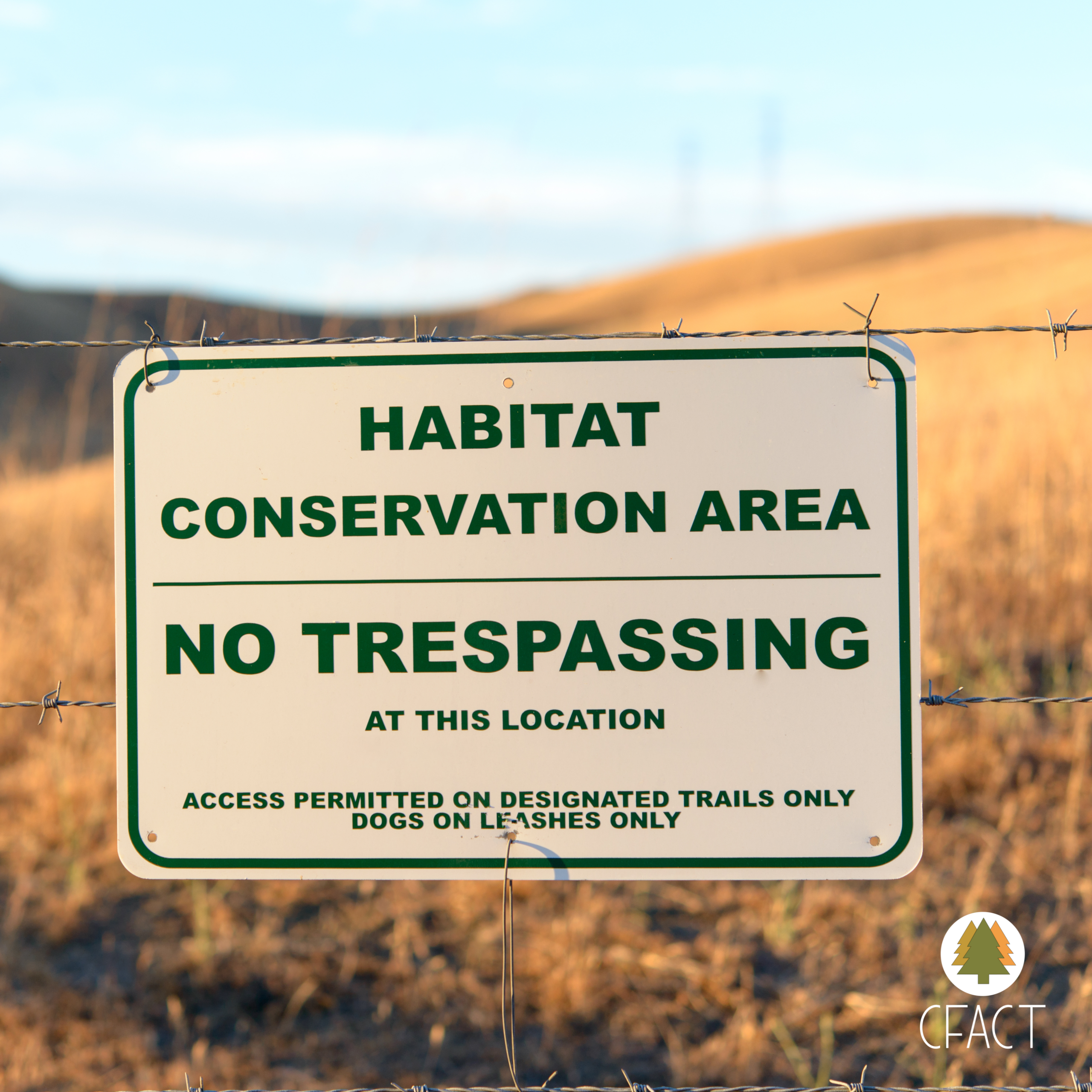
CFACT collegians are always looking for opportunities to amplify their voices and disseminate the organization’s core policy perspectives. Following in the steps of many collegians before him, University of North Carolina Greensboro student Kevin Six recently penned an excellent article making the case for private conservation efforts that was picked up and published by the Montgomery Independent. You can read his op-ed in its entirety below:
“The Case for Private Conservation
Efforts to protect the environment take many forms, from individual lifestyle changes to sweeping public policy. Yet in the pursuit of sustainability, well-intentioned government action can sometimes produce unintended consequences. In recent decades, the assumption has been that more regulations will yield better environmental outcomes. Experience suggests the reality is more complex.
There is no one-size-fits-all solution to conservation. Environmental conditions vary widely across regions, and policies crafted at the federal or state level often fail to account for local nuance. Communities face distinct ecological challenges, and centralized mandates can struggle to address them effectively. A more flexible, market-driven approach—grounded in property rights, incentives, and voluntary stewardship—offers a compelling alternative.
Private conservation works for a simple reason: people tend to care for what they own and depend on. Farmers, ranchers, and landowners have a direct stake in the long-term productivity of their land. When land is healthy, it supports both ecological sustainability and economic viability. This alignment of incentives encourages habitat restoration, water conservation, and wildlife protection without the need for rigid mandates.
History provides clear examples of success. The American alligator, once on the brink of extinction, rebounded significantly thanks to regulated, private harvesting programs that gave landowners a financial incentive to protect wetlands and alligator populations. According to the U.S. Fish and Wildlife Service, this approach helped restore the species to the point that it was removed from the endangered species list in 1987.
Similarly, the American bison owes much of its recovery to private ranchers and conservation groups. While government protections played a role, most bison today are found on private lands, where landowners have invested in breeding and habitat management. Organizations like the American Prairie and numerous private ranches have helped grow bison populations from near extinction in the late 1800s to hundreds of thousands today.
In contrast, centralized land management can face significant challenges. California offers a notable example, where complex regulatory frameworks have contributed to difficulties in conducting controlled burns and managing vegetation. This has been widely cited as a factor exacerbating wildfire risks. Bureaucratic constraints can limit the ability to adapt quickly to changing environmental conditions, sometimes undermining conservation goals.
Private conservation also creates opportunities for innovation and economic growth. Market-based mechanisms, such as water trading in the western United States, allow stakeholders to allocate resources more efficiently while encouraging conservation. By assigning value to natural resources, these systems incentivize their responsible use without heavy-handed regulation.
Accountability is another advantage. Private landowners bear the direct costs of mismanagement. Overgrazing, habitat destruction, or poor stewardship translates into financial loss, creating strong incentives to maintain ecological balance. Likewise, private conservation organizations must satisfy donors and stakeholders, ensuring that funds are used effectively.
Critics often argue that profit motives are incompatible with environmental stewardship. However, this view overlooks how aligned incentives can drive positive outcomes. When conservation is economically beneficial, it becomes sustainable in the truest sense—capable of enduring without constant external enforcement.
None of this suggests that government has no role in conservation. Rather, it highlights the importance of balancing public oversight with private initiative. Evidence shows that when individuals and organizations are empowered to manage resources responsibly, they can achieve meaningful environmental gains.
If the goal is to protect and restore the natural world, it is worth embracing approaches that have demonstrated success. Private conservation, driven by incentives and local knowledge, deserves a central place in that effort.”