Collegians’ Refreshing Take on Nuclear Energy
Campus life has its usual free-food moments. This one came with a radioactive spin.

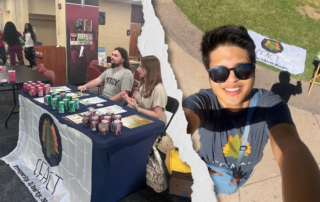
Campus life has its usual free-food moments. This one came with a radioactive spin.
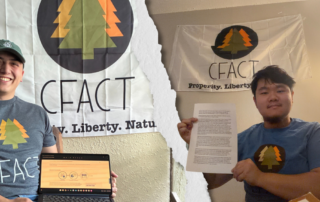
CFACT Collegians know that while nuclear energy may be complicated, unnecessary bureaucracy doesn’t have to be. CFACT Collegians Jonathan Cha and Zackary Whitworth-Painter-Swayze made that case in recent public comments to the Nuclear Regulatory Commission (NRC).
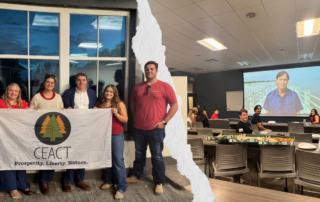
The syllabus looked a little different at Mississippi State University as students gathered for a screening of CFACT’s "Climate Hustle 2," complete with popcorn, pizza, and a side of the climate debate they likely wouldn't encounter from their professors.
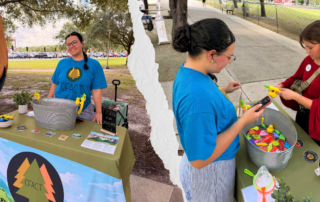
Florida CFACT Collegian brought invasive species to the middle of UCF’s campus this week, but thankfully, these ones were plastic.

One man’s trash is another man’s treasure — or for Collegians at Sam Houston State University, an opportunity for a little hands-on creativity.
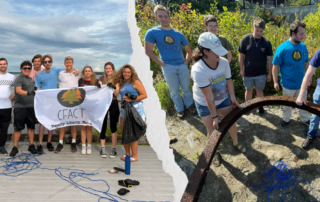
Most people head to the lake in hopes of catching a fish. CFACT Collegians showed up hoping to catch some trash.

Battling the sweltering summer sun in Orlando, CFACT Collegian Kyle Troy at the University of Central Florida posed a simple question to students: “What’s made from oil?”

CFACT Collegian Thien Nguyen urged federal regulators to modernize outdated Arctic drilling rules in recent public comment submission.
Few Americans have heard of the EPA's Municipal Separate Storm Sewer System program.
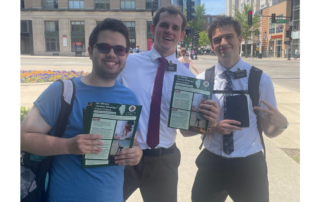
As students passed through the University of Illinois Urbana-Champaign quad during finals week, they were met with a different perspective on climate change.

WATCH NOW: California Collegians SHATTER "Clean Energy" Misconceptions at San Diego State University What if a "green" energy project comes with environmental costs of its own? That was the question CFACT students Caleb Rothstein and Jack Krepps posed to their peers at San Diego State University during a recent round of street interviews focused on offshore wind energy. As students weighed the issue, Caleb and Jack raised concerns on the impacts on marine ecosystems and whale populations. For several participants, it was information they had not encountered before. The reactions varied. Some students remained supportive of offshore wind, while others appeared [...]
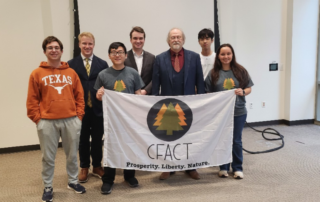
When CFACT Collegians Thien Nguyen and Tiffany Lomax set out to host energy expert Sterling Burnett on University of Texas Austin’s campus, they knew they were bringing students a perspective they rarely encounter in the classroom. The day began over lunch at a local Asian restaurant, where the CFACT Collegians sat down with Burnett and discussed the unique challenge of how to engage young people on complex energy issues. The conversation soon expanded into Burnett's work in energy policy, nonprofit advocacy, and the importance of educating the public on topics often overlooked in mainstream environmental discussions. Back on campus, students gathered [...]

WATCH NOW: CFACT Student Quizzes AZ Students on Nuclear Energy College students hear constant calls for clean energy via solar panels and wind turbines, but far fewer have ever been challenged to consider where nuclear energy fits into the conversation. At the University of Arizona, CFACT Collegian Elliott Taylor set out to test students' assumptions with a simple question and a surprising piece of data. Elliott began by asking students what they believed was the most reliable low-carbon source of energy. The answers came quickly and confidently. Nearly two-thirds of the students interviewed selected solar power as their top choice. Others [...]
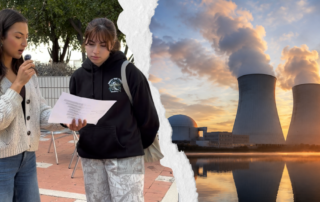
WATCH NOW: CFACT Student Quizzes AZ Students on Nuclear Energy College students hear constant calls for clean energy via solar panels and wind turbines, but far fewer have ever been challenged to consider where nuclear energy fits into the conversation. At the University of Arizona, CFACT Collegian Elliott Taylor set out to test students’ assumptions with a simple question and a surprising piece of data. Elliott began by asking students what they believed was the most reliable low-carbon source of energy. The answers came quickly and confidently. Nearly two-thirds of the students interviewed selected solar power as their top choice. Others [...]

The Environmental Protection Agency (EPA) is considering new regulatory actions aimed at addressing contaminants such as microplastics, pharmaceuticals, and other emerging pollutants that may find their way into America’s waterways. While protecting water quality is a critical objective, questions remain about how far federal regulators should go, what scientific evidence should drive these pivotal decisions, and how new requirements could affect rural communities that depend on affordable access to water resources. CFACT Collegians recognize that environmental stewardship and economic prosperity are not mutually exclusive. That is why CFACT Collegian and Brigham Young University–Idaho student Alex Goodman's public comment to the EPA [...]