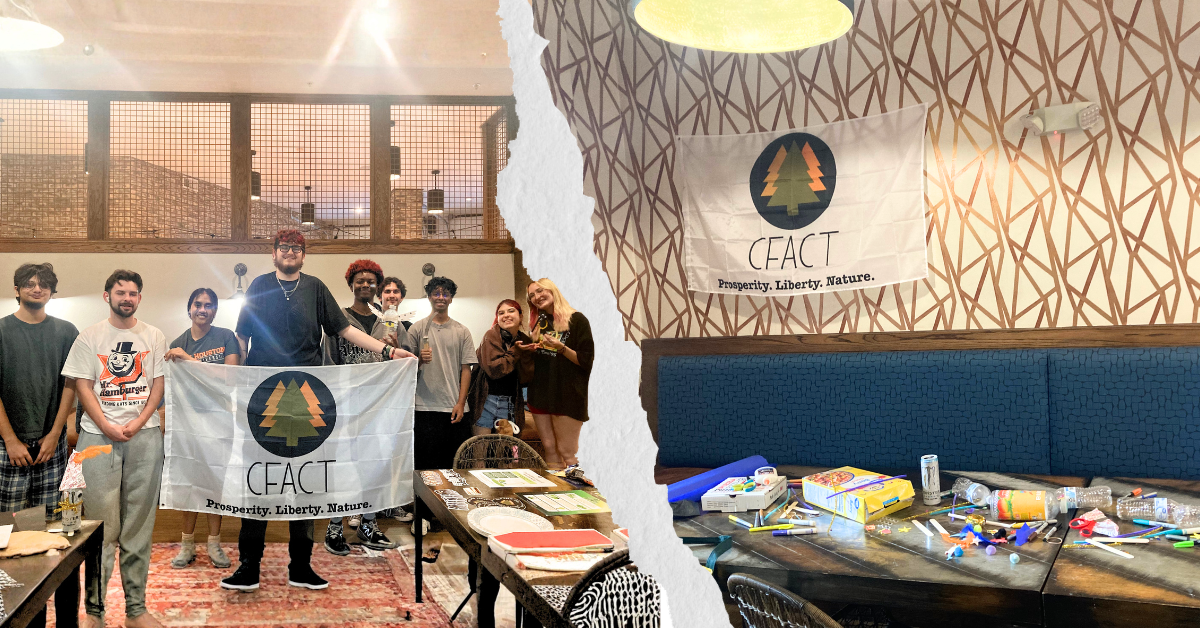
One man’s trash is another man’s treasure—or for Collegians at Sam Houston State University, an opportunity for a little hands-on creativity.
CFACT Collegian Dulce Yon brought students together for a “Trash to Cash Challenge,” where students tapped into their entrepreneurial side to turn everyday discarded items into something new and useful.
Dulce laid out crafting supplies, empty bottles, cereal boxes, scrap paper, and other items she would typically discard that she had collected over the previous weeks, providing students with an array of “trash” to repurpose.
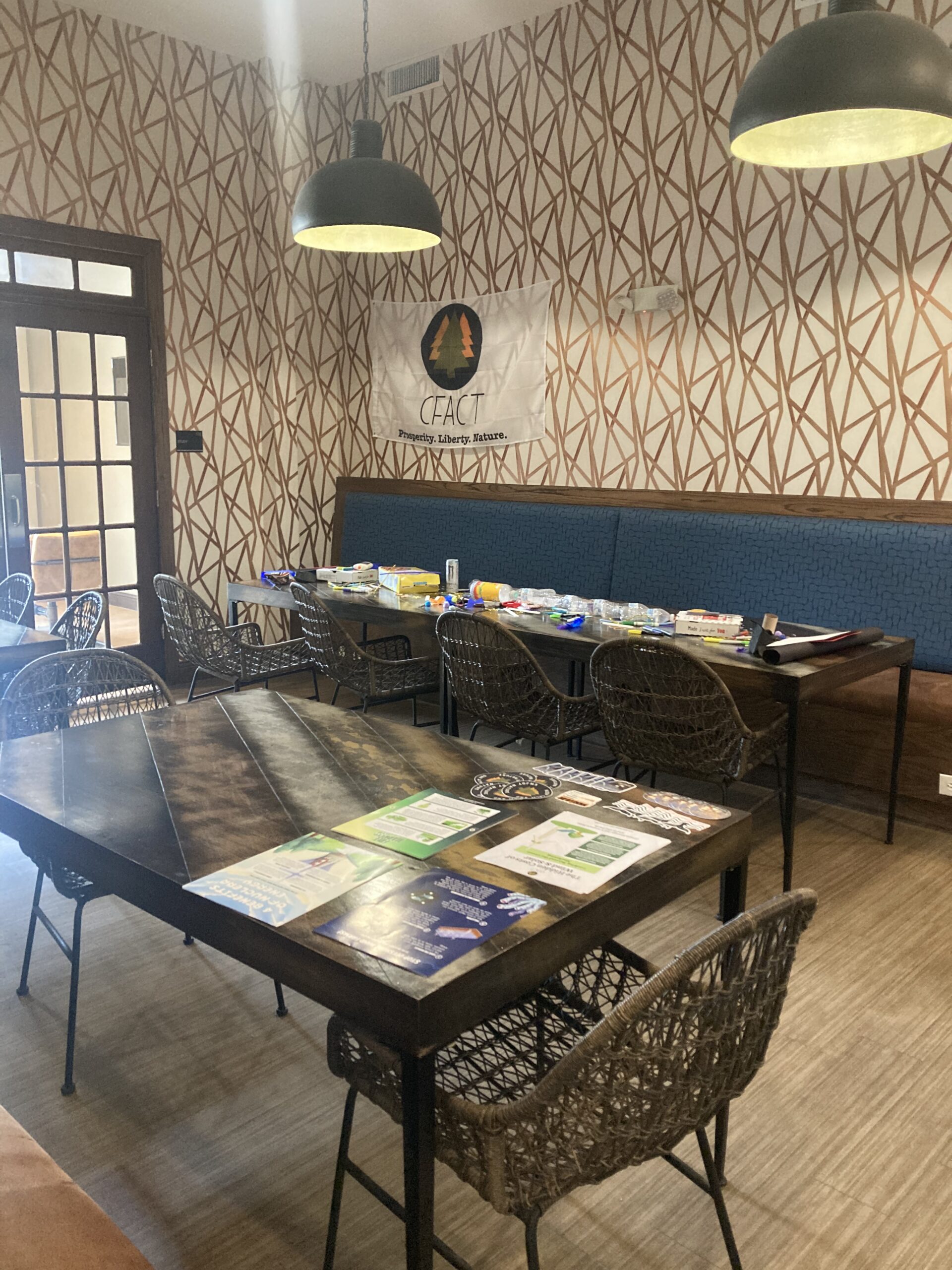
Dulce decorated the Sam Houston State University room complete with her CFACT flag, flyers, and stickers, and filled a long table with crafting materials for students to take on the “Trash to Cash Challenge.”
Rather than assuming these materials had no value, the “Trash to Cash Challenge” encouraged students to think: “What could this become, and is there a better use for it than throwing it away?”
That is precisely the notion CFACT seeks to promote. Environmental problems do not always require another government mandate or ban. Entrepreneurs, businesses, and individuals have incentives to find new uses for waste and create products that consumers actually want.
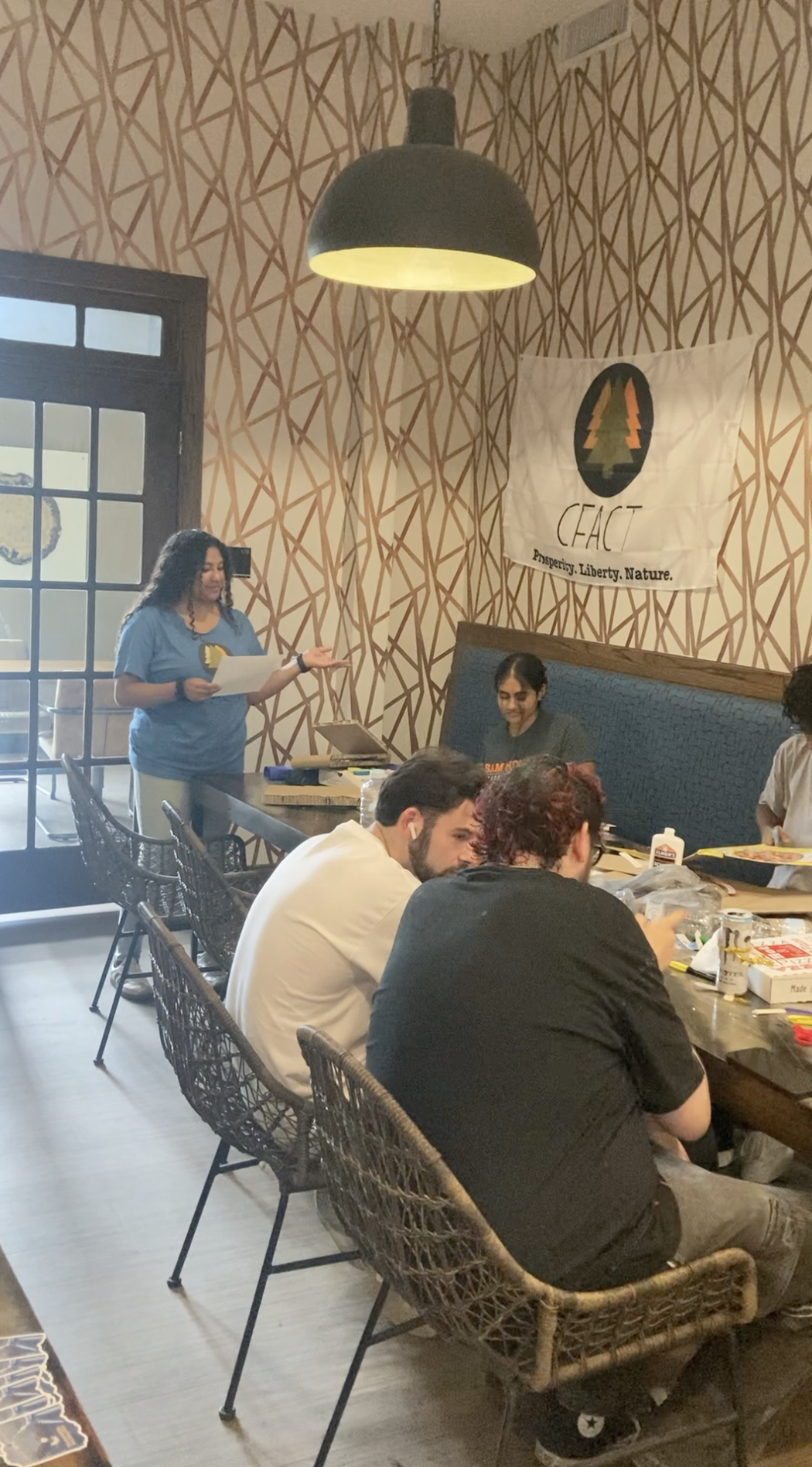
Dulce shares the message of free-market environmentalism with students as they work on their repurposed creations.
“Waste can become a resource,” Dulce told students as they fueled their creativity with pizza and got to work. “Environmental problems can create opportunities for inventors and entrepreneurs to develop better solutions.”
Many of the materials provided were made of plastic, which allowed Dulce to conduct a conversation about plastic waste. Instead of focusing on prohibition, Dulce proposed innovation and finding ways to keep materials in productive use, rather than sending them straight to landfills.
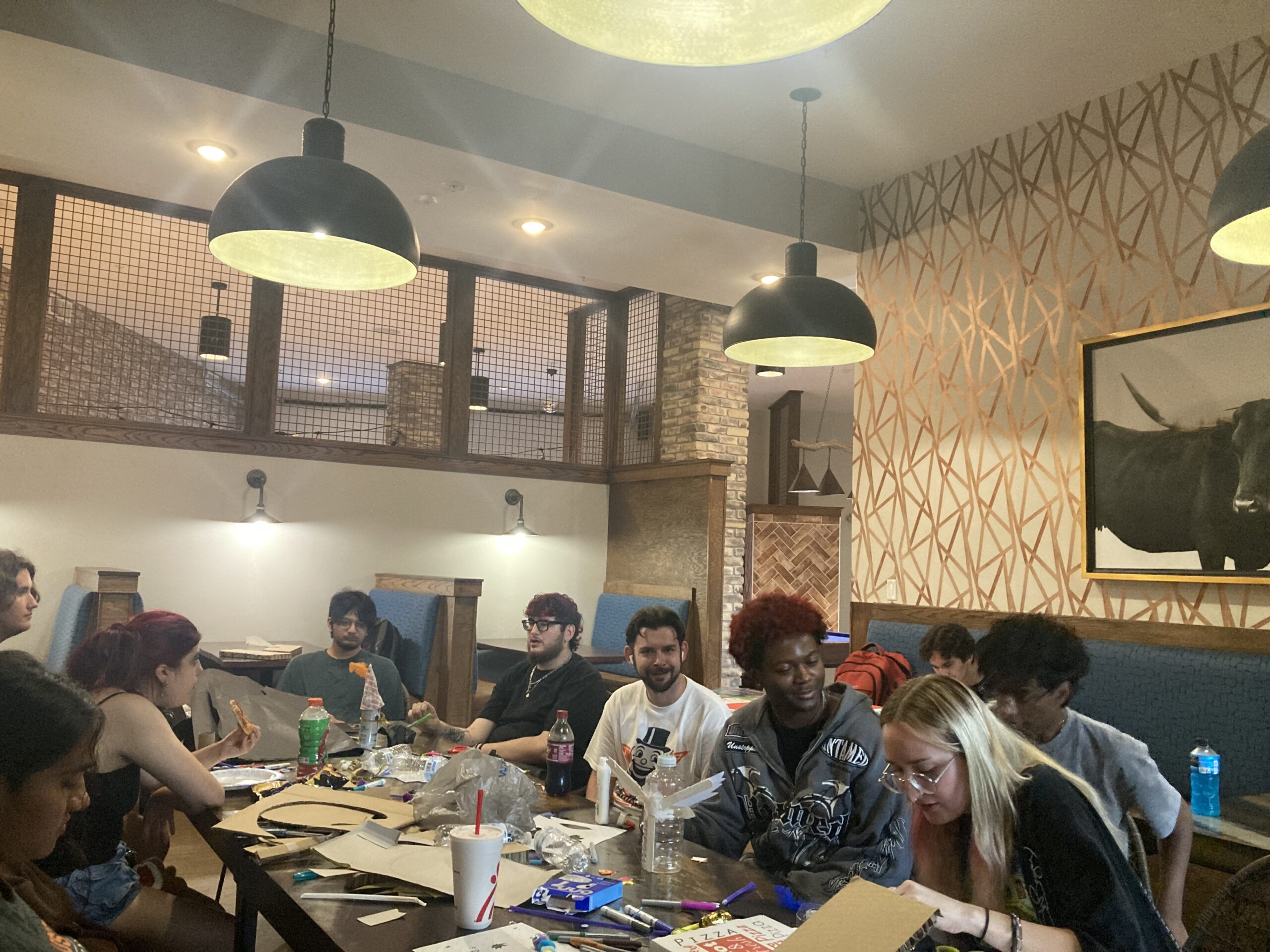
Students get creative while sharing ideas and crafting materials across the table.
CFACT Collegians know that recycling can turn low-value plastic waste into useful products such as pipes, clothing, furniture and much more. Students put that same principle into practice on a much smaller scale, right at their table. Plastic bottles were popular, with students cutting, decorating, and combining them with other materials to create entirely new objects. One student even transformed an ordinary plastic bottle into a colorful creation with wings.
At the end of Dulce’s workshop, students walked away with a handmade creation, a full stomach, and a new perspective: Today’s trash can become tomorrow’s next innovation — that is, if someone can find an economical way to put it to use.