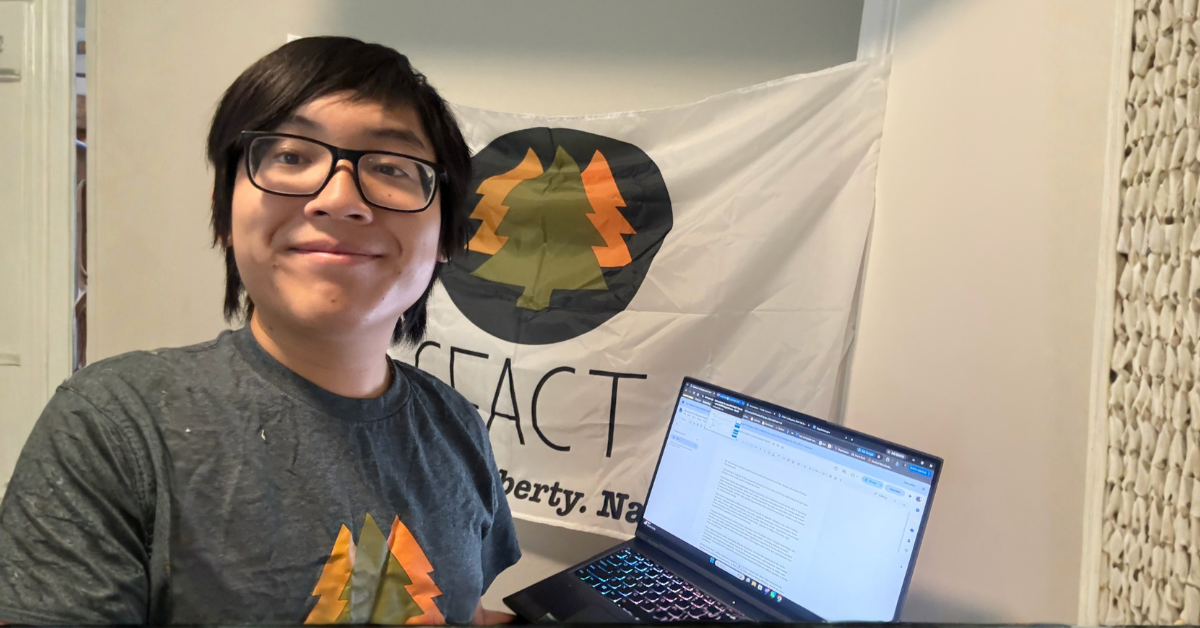
CFACT Collegians have kicked off the fall semester with no time to waste when it comes to setting the record straight on Arctic energy policy. One Texas Collegian took that mission straight to Washington by offering his thoughts on proposed revisions to federal regulations surrounding oil and gas exploration in the Arctic.
The Department of the Interior is looking to update the current Arctic drilling regulations, arguing that they’ve become too rigid, costly, and outdated. The proposed revisions would allow for greater flexibility and more advanced technology to emerge into the scene, while maintaining safety and environmental protections. Less bureaucracy, same responsibility.
CFACT Collegians believe that America can protect its natural resources while also developing them. The two don’t have to compete. Thien Nguyen of the University of Texas at Austin made that principle clear in his public comment: that responsible environmental stewardship and energy development should go hand-in-hand.
“To the Bureau of Safety and Environmental Enforcement and the Bureau of Ocean Energy Management:
I am writing in support of the proposed revisions to the rules governing exploratory oil and gas drilling on the Arctic Outer Continental Shelf.
The United States has significant energy resources, and I believe we should be able to develop those resources responsibly rather than make ourselves more dependent on energy produced overseas. Alaska and the Arctic Outer Continental Shelf can play an important role in American energy production, but the rules governing development should be practical, modern, and based on actual safety needs.
The Arctic is obviously a difficult environment in which to operate. Weather, ice, short drilling seasons, distance from infrastructure, and other logistical challenges make exploration there very different from drilling in other parts of the country. Because of that, regulations should take those conditions into account instead of forcing every operator to follow the same rigid requirements regardless of the circumstances.
I support the Department’s effort to give operators more flexibility when modern technology can achieve the same or a better safety result. If newer equipment, including subsea isolation devices, can safely perform functions that older regulations expected to be handled in another way, companies should be allowed to use those technologies when they can demonstrate that they are effective.
That does not mean safety standards should disappear. Companies operating in the Arcticshould still be held to serious requirements for blowout prevention, spill response, well control, monitoring, and emergency planning. The federal government should continue to make sure companies are prepared for accidents and are using equipment that can safely operate in Arctic conditions.
At the same time, safety regulation should be focused on actual risk rather than unnecessary paperwork or outdated requirements. A rule can be strict without being effective, and it can also become so expensive or inflexible that responsible projects are no longer practical. That does not benefit the environment, consumers, or American energy security. The United States should encourage responsible domestic energy production whenever it can be done safely. Producing more energy at home can strengthen our energy security, support American jobs and investment, and reduce our dependence on foreign producers whose environmental and safety standards may be lower than our own.
I encourage BSEE and BOEM to move forward with these revisions while continuing to hold operators accountable for preventing spills, protecting workers, and demonstrating that newer technologies are safe and reliable.The goal should not be choosing between energy development and environmental protection.
We should be able to do both. Federal regulations should protect the Arctic while also allowing responsible American energy development to move forward.
Thank you for considering my comment.”