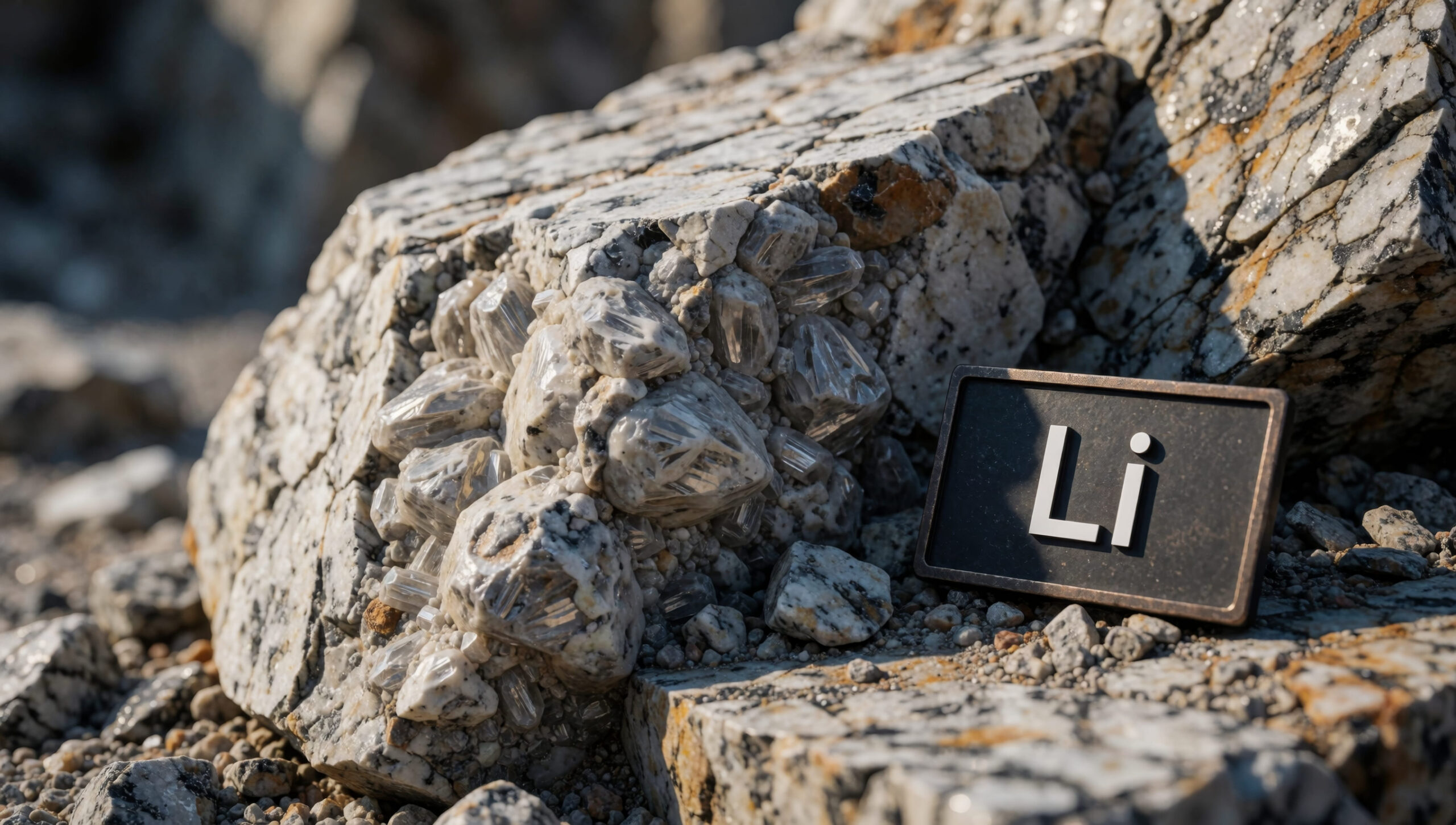
The discovery of vast lithium resources in the Smackover Formation, most notably in southern Arkansas and far into northern Louisiana and across northeast Texas, has sparked widespread interest among corporations and community leaders in all three states.
Last year, the Venture Center, Standard Lithium, and the University of Arkansas launched the Arkansas Lithium Technology Accelerator (ALTA), the nation’s first accelerator program dedicated to lithium and battery supply-chain innovation. Then, in July, the first State of Lithium Symposium was held in Texarkana to examine the future of lithium mining in Texas.
Not to be outdone, Louisiana Governor Jeff Landry, on August 20, signed two executive orders that fast-track environmental permitting for critical minerals and rare-earth production. The first requires state agencies to examine which permits can be permanently expedited. The second declares heavy rare-earth extraction and advanced chemical processing to be vital to local job creation and national defense.
Excitement across the Ark-La-Tex stems from the fact that the heaviest concentrations of lithium in the Smackover Foundation lie in a band from southern Arkansas (crossing into far northwest Louisiana) and far northeast Texas. Arkansas is farthest along, but Texas is itching to join in an economic boom that could also spread into north Louisiana.
The Ark-La-Tex has long been a major U.S. oil and gas hub, but the region has recently suffered a downturn in drilling activity, production growth, and economic impact. This, coupled with the national emphasis on critical minerals, has refocused regional leaders on the hope that lithium extraction will rekindle local economies and bring new prosperity.
Executive Order 13817, which President Trump issued early in 2017, authorized creation of a federal strategy to ensure secure and reliable supplies of critical minerals and break America’s dependence on China for 21st Century technological progress.
Political enemies have fought against the Trump critical minerals agenda from Day 1. Until Trump won a second term, progress toward achieving EO 13817’s goals was stymied.
To reset his reshoring agenda, President Trump in January 2025 issued Executive Order 14154, Unleashing American Energy, which established the U.S. position that it should be the leading producer and processor of non-fuel minerals, including rare-earth minerals.
Two months later, Executive Order 14241 announced immediate measures to increase American minerals production. The EO stated that overbearing federal regulations had crippled the nation’s minerals industries and forced increasing reliance on hostile foreign powers for the minerals critical to the auto, semiconductor, and power industries.
The President upped the ante on August 13, 2025, when the Department of Energy made available nearly $1 billion in funding to advance and scale mining, processing, and manufacturing technologies across key stages of critical minerals and materials supply chains. A few days ago the DOE announced $162 million for nine projects that will recover critical minerals, materials, and other byproducts from industrial feedstocks.
One of these critical minerals is lithium, which is used in high-performance batteries for electric vehicles, grid storage systems, and consumer electronics as well as in the production of metals, ceramics, and pharmaceuticals – and in the aerospace and defense industries. While there are ample lithium resources inside the U.S., in 2025 the nation relied on imports – mainly from Chile and Argentina – for more than half its lithium consumption.
Lithium can be mined from hard rock ore in the form of lithium spodumene or extracted as an ion from briny water. China, which possesses 95% of the world’s hard-rock lithium, has long controlled 70% to 80% of the global electric vehicle lithium-ion battery market. Unless the U.S. dramatically increases its own lithium production, prioritizing electric vehicles benefits an increasingly hostile Chinese government.
Hard-rock lithium production began in North Carolina and became important during World War II for hydrogen production, high-temperature lubrication, and carbon dioxide absorption until outpriced by cheaper, brine-based lithium facilities. Today the Kings Mountain facility is only used for lithium conversion and research. But in 2024, Albermarle Corporation began work to reopen the mine after receiving a $90 million grant from the Department of Defense.
The only active U.S. lithium production operation today is Albemarle Corporation’s Clayton Valley facility in southwestern Nevada. Since 1966, brine extracted from saltwater aquifers has flowed into evaporation ponds, where the lithium is concentrated in multiple solar evaporation ponds for up to 24 months.
The Biden DOE, in October 2024, issued a $2.26 billion loan to Lithium Nevada Corp to expedite lithium carbonate production at a facility adjacent to the Thacker Pass lithium mine in northern Nevada, home to the largest U.S. lithium deposit. Last year, the Trump DOE negotiated a 5% equity ownership in Lithium Americas in exchange for deferring $182 million of debt service.
Even so, all the buzz today over the potential of lithium to lift spirits and fill pocketbooks is in the Ark-La-Tex. It began even before Exxon Mobil in 2023 announced plans to build one of the world’s largest lithium processing facilities near Magnolia, Arkansas, with a capacity to produce 75,000 to 100,000 metric tons a year of lithium carbonate –twice as much as at Thacker Pass.
ALTA has since sponsored three cohorts, each involving multiple companies, to showcase Arkansas’s promotion of lithium production and offer support to companies in sustainable lithium extraction, advanced battery technology, and recycling. Arkansas had folded its lithium production regulations in a network long established for oil- and gas-related brine production.
The July Texas lithium symposium was a first step toward a legislative campaign to set rules for lithium extraction and processing in the Lone Star State. East Texas lithium producers plan to rely on a new technique – direct lithium extraction – that does not involve solar evaporation. This means reinjection of the spent brine, which in Texas today means back from where it came.
Industry representatives, however, say this would dilute lithium concentrations in the brine and force frequent relocation of operations. They are seeking legislative changes in 2027, using the Arkansas regulations as a guide, that would make their operations more productive, and more profitable, over a longer time frame.
Economic geologist Brent Elliott says Texas is in a position that could set the stage for real industry growth and development that even Arkansas lacks. Geoframe CEO Bruce Cutright is urging the Texas legislature to resolve such issues as rights and responsibilities regarding critical minerals and brine. The sticky issue is whether lithium brine is a mere byproduct of oil and gas production or is extracted specifically to recover lithium through direct lithium extraction.
The Ark-La-Tex lithium industry is in its infancy but has potential to revitalize rural and small-town economies – and that dovetails with the goals both of President Trump’s 2018 Rural Prosperity Task Force and 2025’s One Big Beautiful Bill – as well as with his call for rebuilding the domestic critical minerals industry and ending the stifling of mining operations in America.
This article originally appeared at RealClear Energy