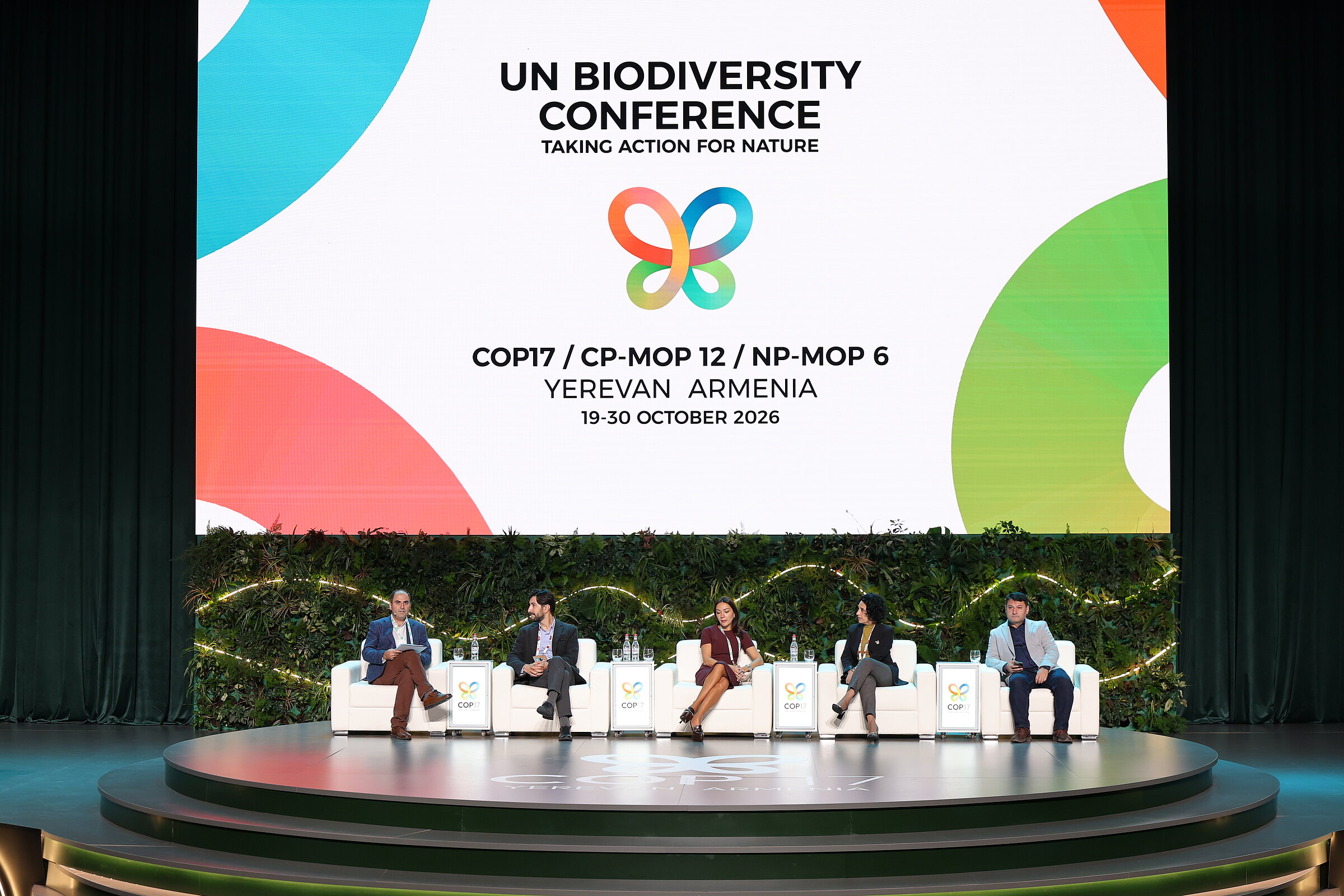
YEREVAN, ARMENIA — Private property rights, free markets, access to resources, and national sovereignty suffered another series of blows at the United Nations Convention on Biological Diversity’s 17th Conference of the Parties (COP17). In Armenia’s capital, bureaucrats and tax-funded activists advanced an agenda extending far beyond protecting endangered species: expanding international influence over land, financial resources, and economic activity.
The headline outcome was the so-called “Yerevan Pathway,” a response to the first Global Review of the Kunming-Montreal Global Biodiversity Framework. Expressing “deep concern” that the UN’s 2030 targets are at risk, the agreement calls for accelerating implementation, reforming subsidies deemed harmful to nature, mobilizing additional funding, and aligning national economic decisions with biodiversity objectives.
In practice, the measures represent another step toward subordinating private property, free markets, and national sovereignty to UN-approved priorities.
Americans Join UN Push—Without US Ratification
COP17 President Hambardzum Matevosyan, Armenia’s environment minister, acknowledged the agenda’s sweeping implications. “Our work here in Yerevan can influence how natural resources are used, how goods are produced and consumed, and where public and private financial resources are directed,” he said. Biodiversity policy, he added, “should extend beyond the purview of environment ministries” into finance, agriculture, and economic development.
In an interview with CFACT, Matevosyan celebrated the participation of American officials, NGOs, and financial institutions, despite the United States never ratifying the underlying treaty. “We are pleased to see so many delegates from the United States,” he said.
Indeed, the UN’s controversial “30 by 30” agenda has already made significant inroads in America. In 2021, then-President Joe Biden signed Executive Order 14008, directing federal agencies to develop a strategy to conserve 30 percent of U.S. lands and waters by 2030. California adopted the same target under Democrat Gov. Gavin Newsom, later enshrining it in state law.
While UN biodiversity agreements do not bind America, their objectives can be advanced through domestic legislation, executive actions, and land-use restrictions. President Donald Trump revoked Biden’s order in 2025, but California’s program and other schemes across America continue to advance.
CBD Executive Secretary Astrid Schomaker told CFACT that a small federal delegation attended alongside roughly 70 participants from California. Expressing hope that Washington would eventually join the treaty, she said the UN was engaging with Americans “as much as we can.”
Money, Subsidies, and Central Planning
The Yerevan Pathway retains the push to eliminate, phase out, or reform incentives deemed “harmful to biodiversity,” despite opposition that softened some language. Under the broader UN framework, governments are supposed to reduce such incentives by at least $500 billion annually by 2030.
Critics warn that the definitions could encompass subsidies or incentives affecting conventional agriculture, fertilizer, fossil fuels, and other productive activities. The result would be greater government influence over where capital flows and which industries prosper.
Nearly $2 billion in funding pledges were announced at COP17, largely from governments and publicly funded institutions. But that represents only a fraction of the hundreds of billions the UN says will be required.
Another mechanism is the Cali Fund for Digital Sequence Information, established at COP16. The arrangement seeks financial contributions from companies commercially benefiting from genetic information derived from plants, animals, and other organisms, including applications involving synthetic biology. Those funds would then be distributed through a global slush fund.
Despite the marketing slogans, these arrangements represent an expanding system of global economic planning, with international bureaucracies exercising growing influence over private enterprise, capital allocation, and national budgets.
Indigenous Groups Gain Influence
The summit also advanced the formal role of indigenous organizations within the UN biodiversity apparatus. Under the Sevan Guidelines, a permanent committee will provide indigenous representatives an ongoing role in the process, including a co-chair nominated through an indigenous selection mechanism rather than by a national government.
The UN is also promoting greater reliance on “traditional knowledge”—much of it overtly pagan in nature—in conservation and management of genetic resources.
Religious elements were prominent at the summit. Prayers invoking river deities and forest gods could be heard, while one indigenous participant interviewed by CFACT described his tradition teaching that people originated from the sea.
The institutional implications extend beyond religious practices. Nongovernmental organizations representing indigenous interests are acquiring a more formal role in shaping international biodiversity policy, raising questions about representation, accountability, and national sovereignty.
Expanding Global Oversight
COP17 also strengthened mechanisms for monitoring governments’ progress toward UN biodiversity targets. A new expert group was established to support reporting and review, with the Global Environment Facility asked to finance related work.
The decisions further encourage governments to integrate biodiversity objectives into economic planning at every level, including state, provincial, municipal, and private-sector activities.
Negotiators also advanced work involving synthetic biology, invasive species, wildlife management, and the integration of biodiversity with climate policy through so-called “nature-based solutions.”
Together, these measures expand the international framework for influencing decisions traditionally made by national governments, local communities, and private property owners.
The Bigger Picture
The agenda has been advancing for decades. The UN’s 1976 Vancouver Declaration criticized private landownership as a contributor to wealth concentration and called for stronger public control over land use. Today’s biodiversity initiatives continue raising fundamental questions about who should control land and natural resources.
The immediate target remains conserving 30 percent of the planet’s land and waters by 2030. But the broader ambitions extend into agriculture, industry, finance, and virtually every sector of economic activity.
Not everything went according to plan in Yerevan. Negotiators softened some proposals, while the Cali Fund remains far short of its financial ambitions. Nevertheless, COP17 advanced additional mechanisms for international oversight, financial mobilization, and influence over domestic economic policy.
For Americans, the stakes are especially high. The United States never ratified the Convention on Biological Diversity, yet policies promoted under its auspices continue finding their way into American government programs.
Whether decisions about land, resources, and economic activity remain with free people, property owners, and their elected representatives—or increasingly fall under the influence of unelected international bureaucracies—is a question that cannot be ignored. Defending self-government begins with understanding the threat.
Featured image UN publicity photo