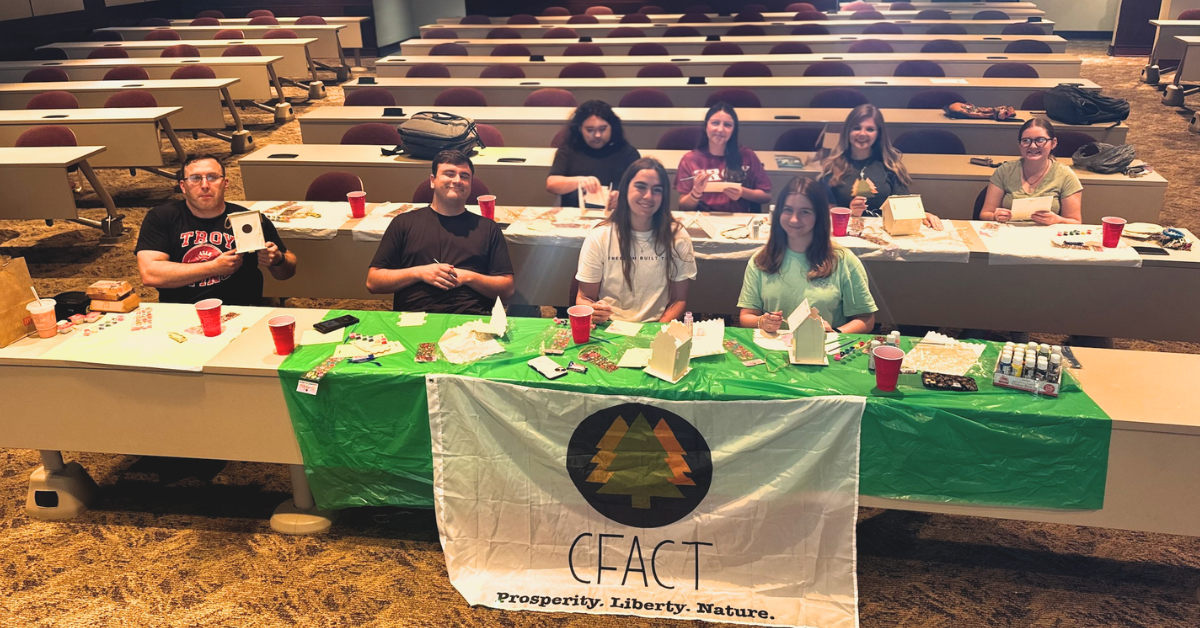
CFACT Collegians across the country spent the spring semester combining creativity with conservation through a series of birdhouse-painting events designed to raise awareness about challenges facing bird populations.
As environmental activists push for rapid energy expansion in the name of sustainability, CFACT Collegians took a closer look at a question that is often overlooked: what happens to wildlife when green energy comes at a cost?
Students at Troy University, the College of the Sequoias, and Sam Houston State University gathered to paint and decorate wooden birdhouses while engaging in discussions about wildlife conservation, habitat protection, and the impact energy development can have on birds.
At Troy University, CFACT Collegian Caitlyn Harris’ birdhouse-painting workshop encouraged students to consider the role birdhouses play in supporting local ecosystems and spring wildlife. As students painted and assembled their birdhouses, conversations centered around conservation and the importance of environmental stewardship. The event highlighted how individuals can contribute to environmental awareness within their own communities through simple, practical actions

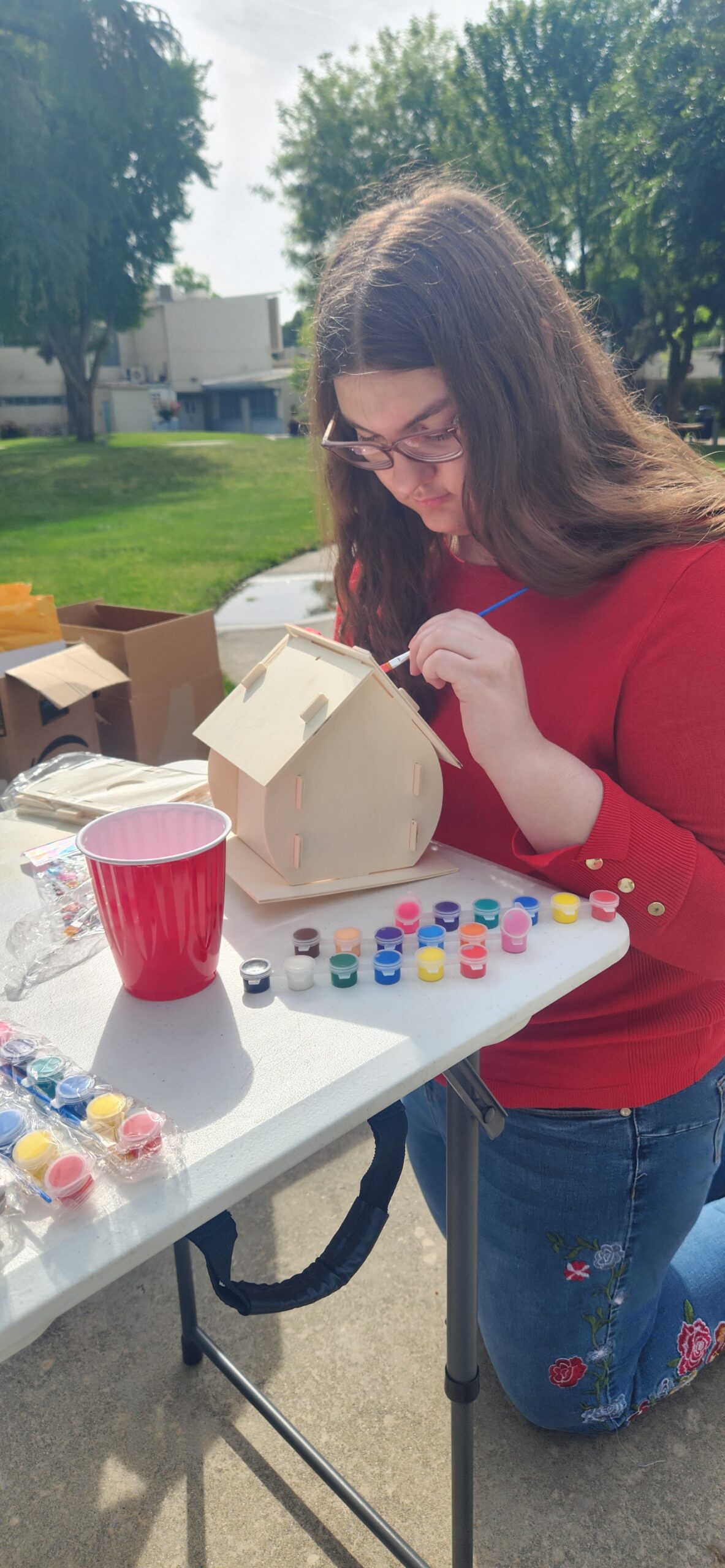
Across the country at the College of the Sequoias, students gathered in the campus quad to decorate birdhouses while discussing the impact wind turbines can have on bird populations and ways to raise awareness about the issue. Due to the high speeds and sharp edges of wind turbine blades, an estimated 140,000 to one million birds are killed each year in the United States. Led by CFACT Collegian Haley Gutierrez, the event provided a relaxed setting for thoughtful conversations about wildlife conservation and the tradeoffs often overlooked in discussions surrounding renewable energy.
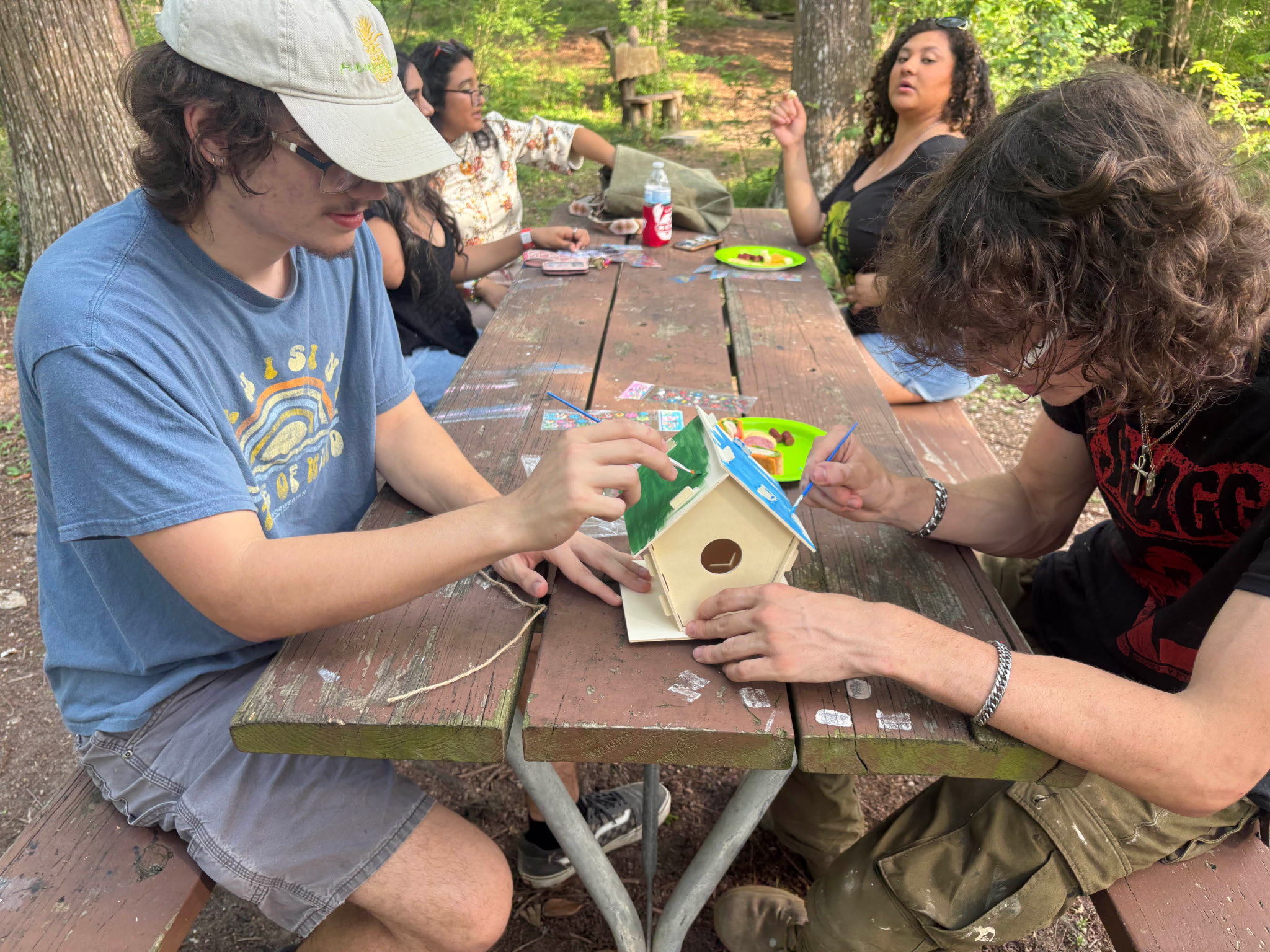
Meanwhile, at Sam Houston State University, Nickolas Walker introduced students to emerging technologies such as IdentiFlight and BirdVision, which use AI-powered monitoring systems to reduce bird fatalities at wind facilities. Participants also discussed the importance of avoiding migratory routes when citing wind projects and explored alternative energy options, including nuclear power.
“Overall, the birdhouse painting workshop was a successful and engaging addition to the meeting,” CFACT Collegian Caitlyn Harris said. “We had an amazing time hosting the activity and were glad to see so many students enjoy it and take pride in their finished birdhouses.”
These birdhouse events brought over 40 students together across all three campuses. For many attendees, the information shared during the workshops offered a perspective on wildlife conservation that is often absent from mainstream environmental discussions.