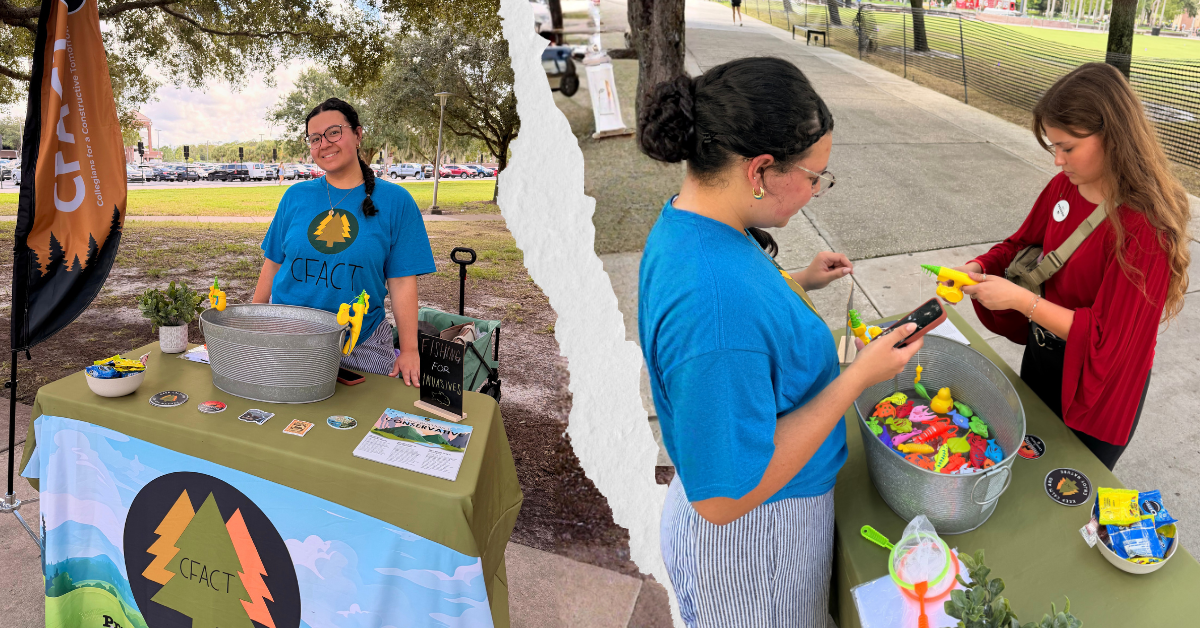
CFACT Collegian Valerie Pastrana brought invasive species to the middle of UCF’s campus this week, but thankfully, these ones were plastic.
Valerie came prepared to reel students in with her unique table display and teach them about conservation, and they surely took the bait. A tub filled with colorful magnetic creatures, and miniature fishing rods caught the attention of many students on their way to class, who stopped by to check it out.
But a successful catch was only half the challenge.
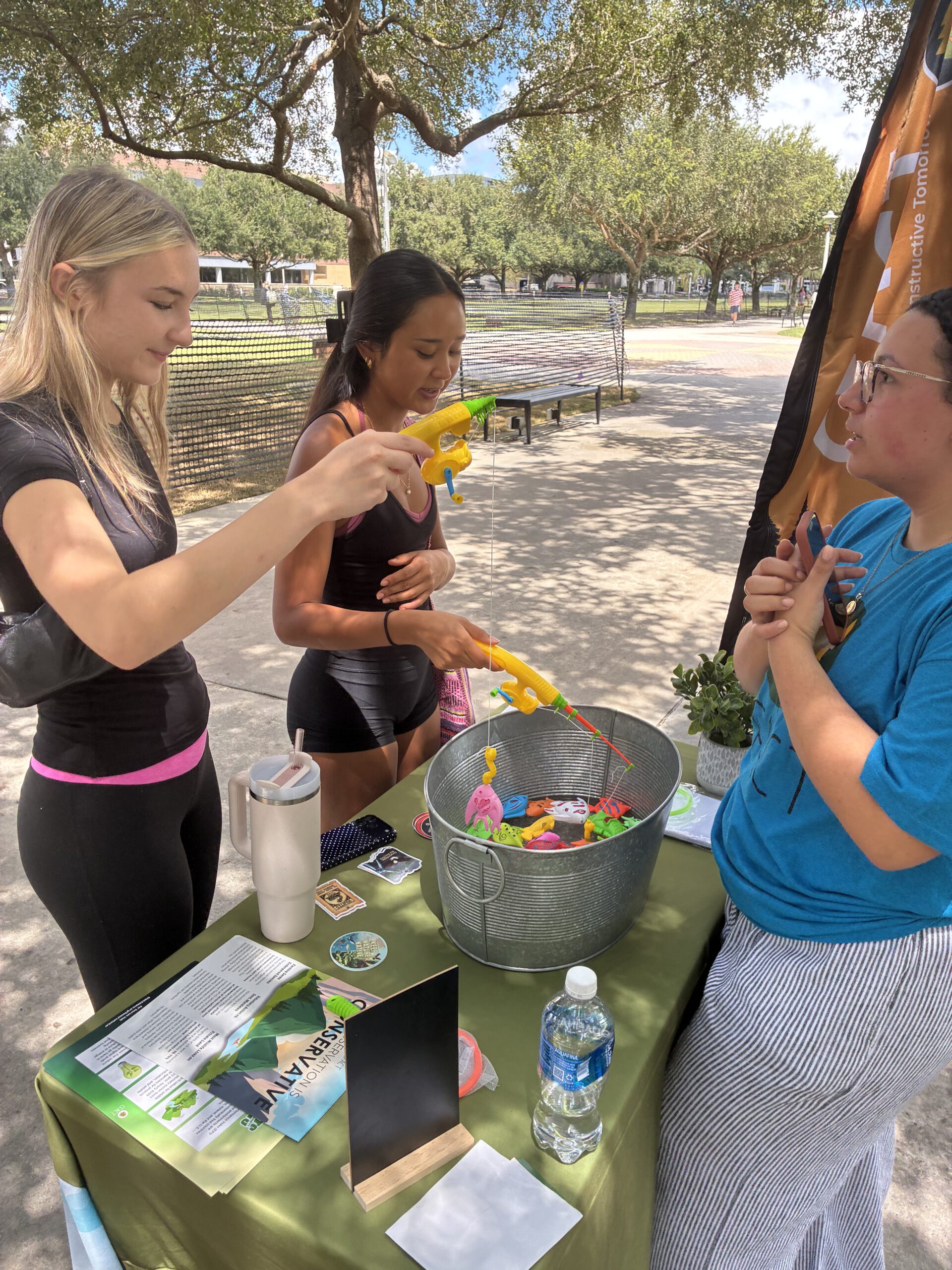
After making their catch, students answer Valerie’s question about Burmese pythons, an invasive species in the Everglades.
As students reeled in their fish, Valerie encouraged them not to catch-and-release. She then posed a question to test students’ on invasive species, native wildlife, and conservation. If they answered correctly, they’d walk away with a prize, and hopefully a little more knowledge about what’s crawling—or swimming—where it doesn’t belong.
Could a single green iguana really lay up to 70 eggs in a year? Are Burmese pythons really infamous for disrupting the Florida Everglades? Does protecting nature always mean leaving it completely untouched? Students took a shot at questions like these while Valerie used their answers to spark conversations about what responsible environmental stewardship actually looks like.
Valerie explained to students that activities like hunting, fishing, habitat management, and invasive-species removal can all play a major role in conservation and maintaining balanced ecosystems. In her own words, “we are one with nature” and therefore have a responsibility to our environment.
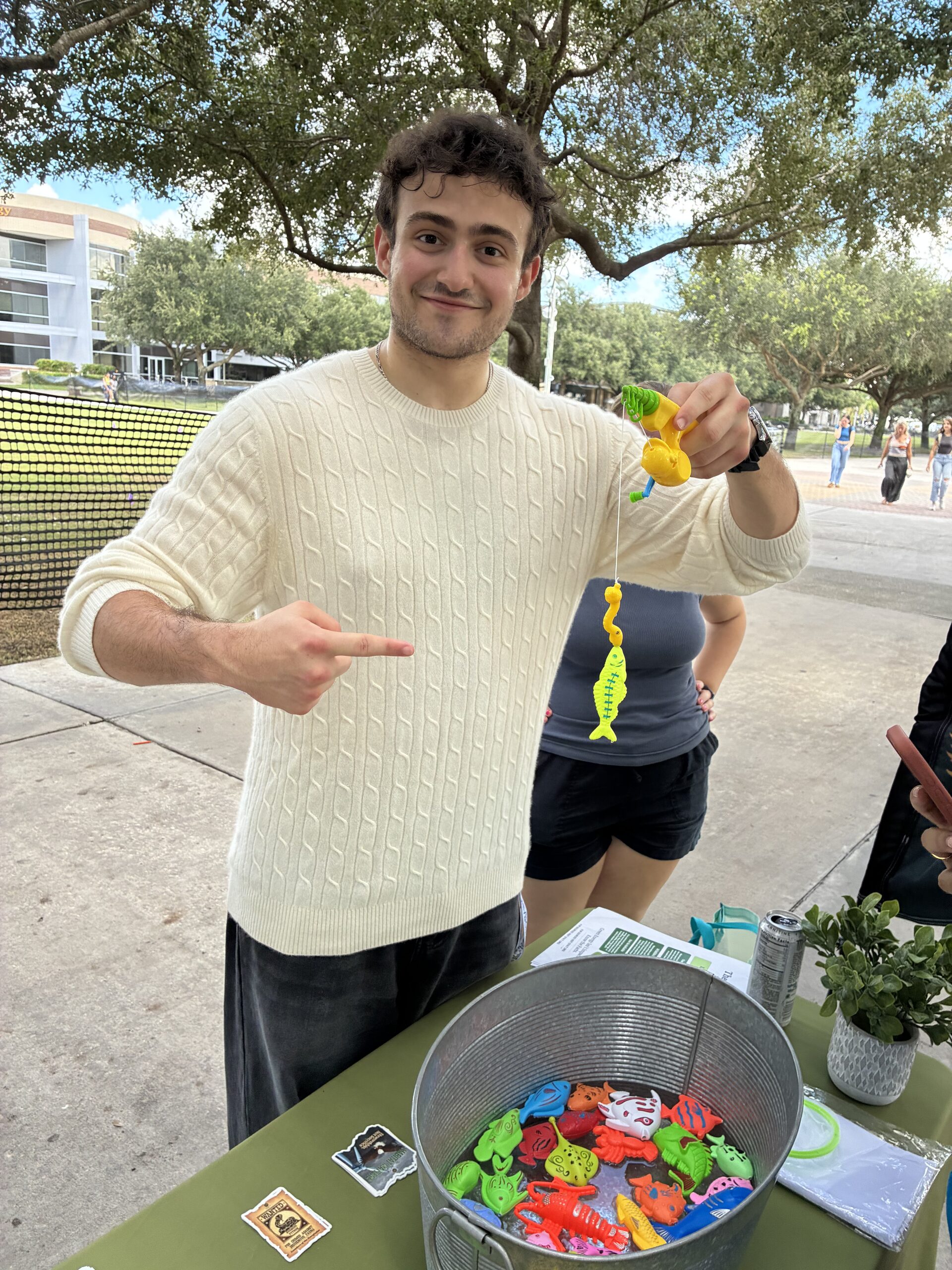
A student proudly shows off his invasive catch.
The game revealed one important distinction: not every species that finds itself outside of its native range is invasive. Invasive species are nonnative species that cause harm, and sometimes managing them requires people to take an active role—just as students did when catching invasives right at Valerie’s table.
With more than 25 students stopping by to play, Valerie’s set up proved that getting students involved in conservation can be simple and fun. For CFACT Collegians, conservation means more than just talking about the environment, but taking an active role in protecting the ecosystems around us.