Illinois Collegian Calls Out Hidden Housing Costs
Few Americans have heard of the EPA's Municipal Separate Storm Sewer System program.
Few Americans have heard of the EPA's Municipal Separate Storm Sewer System program.
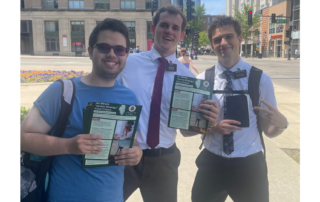
As students passed through the University of Illinois Urbana-Champaign quad during finals week, they were met with a different perspective on climate change.

This spring, students in California and Illinois led nature-focused hikes that brought CFACT’s message directly onto the trail. At San Diego State University, CFACT collegians Caleb Rothstein and Jack Krepps led a group hike at Cowles Mountain in Mission Trails Regional Park, providing scenic views of the Pacific Ocean, the perfect visual for attending students as they learned from Caleb and Jack how offshore wind is detrimental to endangered whale species. Despite a heat advisory and some shifting arrival times, the group still brought out 11 attendees for the outing. The hike also gave newer second-semester members a relaxed opportunity to [...]
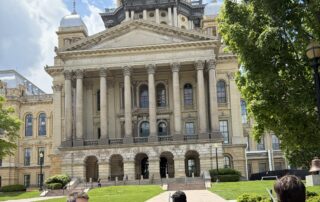
CFACT students took the fight for energy sanity straight to the Illinois State Capitol. On May 1, National Director Nate Myers met CFACT collegian Zach Lochard in Springfield, Illinois, along with two newly recruited students: Matt Saner of Illinois State University and Conner McEleney of the University of Illinois Urbana-Champaign. Together, the group spent several hours conducting a “hill-drop,” personally delivering CFACT literature to every available Illinois state lawmaker's office. The students distributed a specially designed “Illinois Green Energy Fact Check” flyer challenging recent claims made by state politicians and environmental activists about the cost, reliability, and supposed benefits of Illinois’ [...]

Earlier this year, the Environmental Protection Agency (EPA) proposed revisions to Section 401 of the Clean Water Act, a provision that governs how states and authorized tribes review federal permits for projects that may impact local water quality. The proposal seeks to restore a broader interpretation of state authority, allowing certifying agencies to evaluate the full scope of federally permitted activities—not just narrow point-source discharges such as pipes or ditches—and giving states greater procedural flexibility to approve, deny, or condition permits in ways that align with their own water quality standards. The proposed changes would reinforce the Clean Water Act’s original [...]

Lawmakers should simply lift Illinois’ nearly 40-year moratorium on new, large-scale reactors.
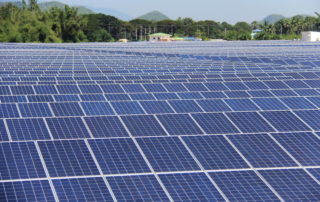
To add insult to injury, the owner of the 49-acre property, where the thousands of solar panels were to be installed, changed his mind and came out in opposition to the project.

It is doubtful that Bundleflower Solar would even pursue the project in Pontiac (or anyplace else) without the prospect of Energy Tax Credits under state law, as well as the federal subsidy for solar developers, known as the Investment Tax Credit (ITC).