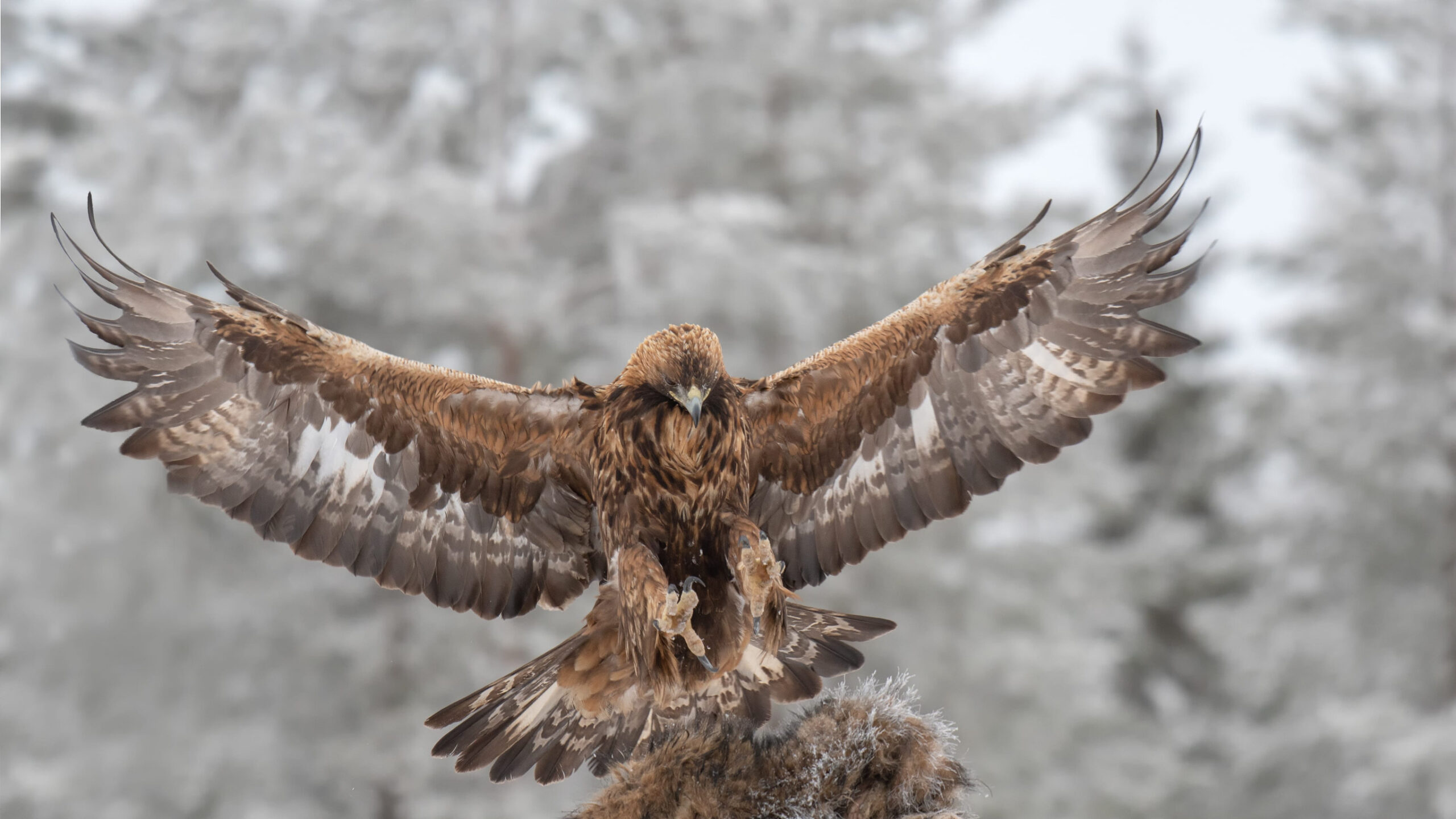
With a seven-foot wingspan. the golden eagle is the flying monarch of the range. Primarily a western bird, they frequently feed on range rodents making them useful as well as majestic. But wind turbines are taking an ever-increasing toll. A 2025 study — “Estimated golden eagle mortality from wind turbines in the western United States” — estimates that the number killed by wind turbines doubled from 2013 to 2024. A major tagging study in Wyoming by biologist Mike Lockhart found that spinning wind turbine blades killed more golden eagles than all other human causes combined. The range states from Texas to North Dakota together have over 50,000 operating wind turbines with many more coming.
There is a huge loophole in the law when it comes to wind machines killing eagles, and Congress needs to close it. Wind turbines can legally kill other birds, but eagles have special protection under the federal Bald and Golden Eagle Protection Act. On paper, a wind facility has to have a permit to kill an eagle, but, as things stand now, it is far cheaper to pay the fine for killing an eagle without a permit than it is to get a permit. So, a lot of wind facilities are simply not getting permits. Thus, the eagles are not getting the protections the permits call for.
The U.S. Fish and Wildlife Service (USFWS) enforces the Eagle Protection Act. They recently fined two wind facilities for killing an eagle without having a permit. In each case, the fine was around $15,000. This is much less than it costs to get and operate under a permit.
To begin with, the permit application fees start around $26,000 for a simple facility, much more for complex ones. But the permits also include a number of relatively expensive activities which adds a lot to the cost. These include surveying the area slated for wind towers so as to avoid eagle nesting sites. It also includes ongoing monitoring and reporting kills, which can be used to modify turbine operations to reduce the kill rate.
In fact, there are in development eagle detection systems that will be able to automatically shut down wind turbines when eagles approach them. These technologies will be standard permit conditions. They should dramatically reduce the golden eagle kill rate. Since permits must be renewed every five years, they can be retrofitted to existing facilities as well.
So, it is likely that the cost of having a permit is at least ten times the fine for killing an eagle without one, perhaps much greater. And you only get fined if FWS finds out about the kill. Clearly there is a tremendous incentive for wind facilities to not get permits, and there is presently no law saying they have to get one in order to operate. This is the loophole that must be closed.
The Eagle Protection Act should be amended to require that all commercial wind power facilities must have eagle-kill permits as a regulatory condition of their operation. It would be a simple matter to make having an eagle-kill permit a federal requirement for operating a commercial wind power facility. Small home windmills need not be covered, nor would wind powered water pumps, etc. We are talking about the huge wind farms presently dotting the range, with many more coming. It is time to take saving golden eagles seriously.
Another factor that Congress should correct is the secrecy that presently surrounds the killing of eagles by wind turbines. Wind facilities with permits presently patrol and report every dead eagle they find, but FWS refuses to disclose this data. Researchers could use this data to improve Eagle protection measures. Moreover, the public has a right to know how and where eagles are being killed.
Congress must amend the Bald and Golden Eagle Protection Act so it actually protects golden eagles from wind turbines. Every proposed wind farm presently must be approved by the Federal Aviation Administration before it can be built. Adding a permit to kill eagles would not be a big step, and it would help protect the eagles.