Science works on evidence, real evidence. Science truth is not an opinion or a majority vote. However, where some opinion can come into the process, to some degree, is right at the front end when a scientific hypothesis is proposed.
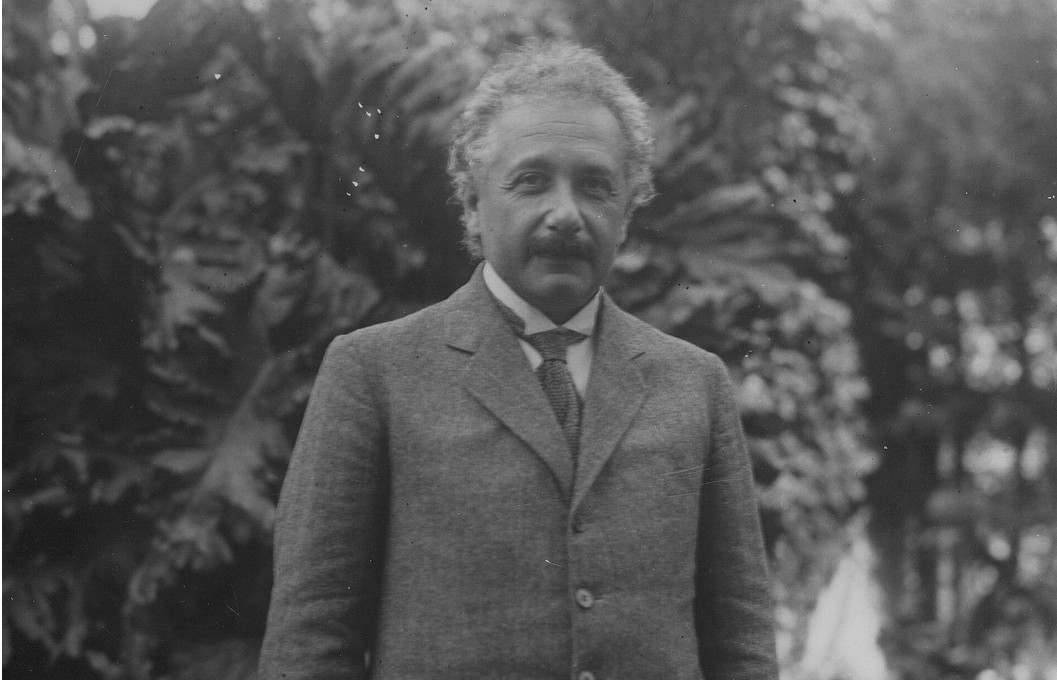
So let us look at an example. Some 120 years ago now, a young, unknown fellow named Albert Einstein came up with what seemed like some crazy ideas. One was that the fastest speed possible was the speed of light in a vacuum. Another was that the faster you travel, the more time slows down. And yet another was that light will be bent by gravity. These ideas sounded very far-fetched, and many people said to Einstein, “Listen Mr. Einstein, if you only use common sense, you will realize that…”
Anyway, Einstein’s ideas remained merely ideas until gravity was really observed to bend light. An experiment was carried out, when the opportunity arose. On May 29, 1919, there was a total eclipse of the Sun. Einstein, plus other scientists, travelled out into the ocean on a ship, to be positioned to see the eclipse perfectly. As the eclipse occurred, they were able to measure starlight from the Hyades star cluster, and they measured it bending slightly as it passed the darkened Sun. Overnight, Einstein moved from being a minor unknown scientist to being an international celebrity. One tiny bit of real proof indicated that the rest of his theory was probably correct.
So, what about the safety of nuclear power?
Let us start with the most well-known so-called nuclear “disaster,” Fukushima. Let us examine the incident as if it were a scientific ‘experiment.’ A huge wall of water, the tsunami, smacked into a nuclear reactor complex, jumping over the tidal wave barrier. So that was the first phase of our ‘experiment,’ to have a tsunami larger than the design specification.
Then, the next part was to badly position the primary electrical cooling pumps so that the water would flood them and knock them out. The reactor complex then did what it was supposed to do, and it switched to backup diesel pumps. But experimental phase three came into effect. Some of the diesel fuel supply had been stored in outside tanks, which were washed away. The pumps ran out of fuel. There were a number of other phases to the ‘experiment’, such as poor management systems and others. When all was told, one could not have designed a better ‘experiment’ to totally stress the nuclear safety of Fukushima.
Now we ask, “After all this drama, failures, and poor decisions, how many people were killed by nuclear radiation?” The answer is zero. So how many people were injured by nuclear radiation? Answer, zero. And how much private property was harmed by nuclear radiation? Answer, zero.
So, the final ‘experimental’ result was that the nuclear radiation did no harm.
We can conclude that Fukushima was not a nuclear disaster. It was a conventional industrial accident, which turned out to be a financial disaster for the nuclear company, plus a public relations disaster for the company and the Japanese government. But it was not a nuclear disaster.
If one had designed the whole Fukushima affair as a deliberate experiment to test nuclear safety, one could not have done better to clearly illustrate how safe nuclear was when a giant amount of power was smacked by a giant wall of water.
The same was true of the Three Mile Island nuclear power incident in the U.S. Nobody was killed or harmed by nuclear radiation.
OK, so what about Chernobyl? Yes, some people were killed by nuclear radiation. But fewer than 60, not thousands, as often claimed by some anti-nuclear activists. But Chernobyl had no radiation containment structure, had a bad reactor design, and had other faults. Yet only a few died including first responders who bravely rushed into burning radioactive debris to quell fires. So, yet another good ‘experiment’ to prove the safety of nuclear power.
Now add to the story that these three reactor complexes were all very old. Nuclear development has moved on, and modern reactors are far more sophisticated and much safer than their pioneering predecessors. The result is that modern reactors are extremely safe, as proven by real-world engineering results. But the anti-nuke crowd has continued to spread wild theoretical speculations about hundreds of thousands of people who could be killed if a nuclear reactor went wild. But the actual evidence disproves these theoretical speculations.
Let us now create our own theoretical speculation. Large Boeing aircraft fly over New York. So let us imagine a fully loaded Boeing 747 flying out toward Johannesburg. And another fully loaded Boeing 747 is flying in from London. The two of them collide head-on over Manhattan, and the two balls of flame fall into Broadway and Wall Street. They explode on impact.
Can you imagine the magnitude of the disaster?
Just because you can imagine that does not mean that flying should be banned. Of course not.
So why make such a drama about the safety of nuclear power merely because you can spin your imagination into a fanciful, disastrous outcome? The real evidence to date has clearly shown that nuclear power is far safer than anyone ever imagined.
Fantasy speculation is well and good, for stories, like Einstein did. But then you need real-world evidence to show whether the fantasy speculation is true or false.