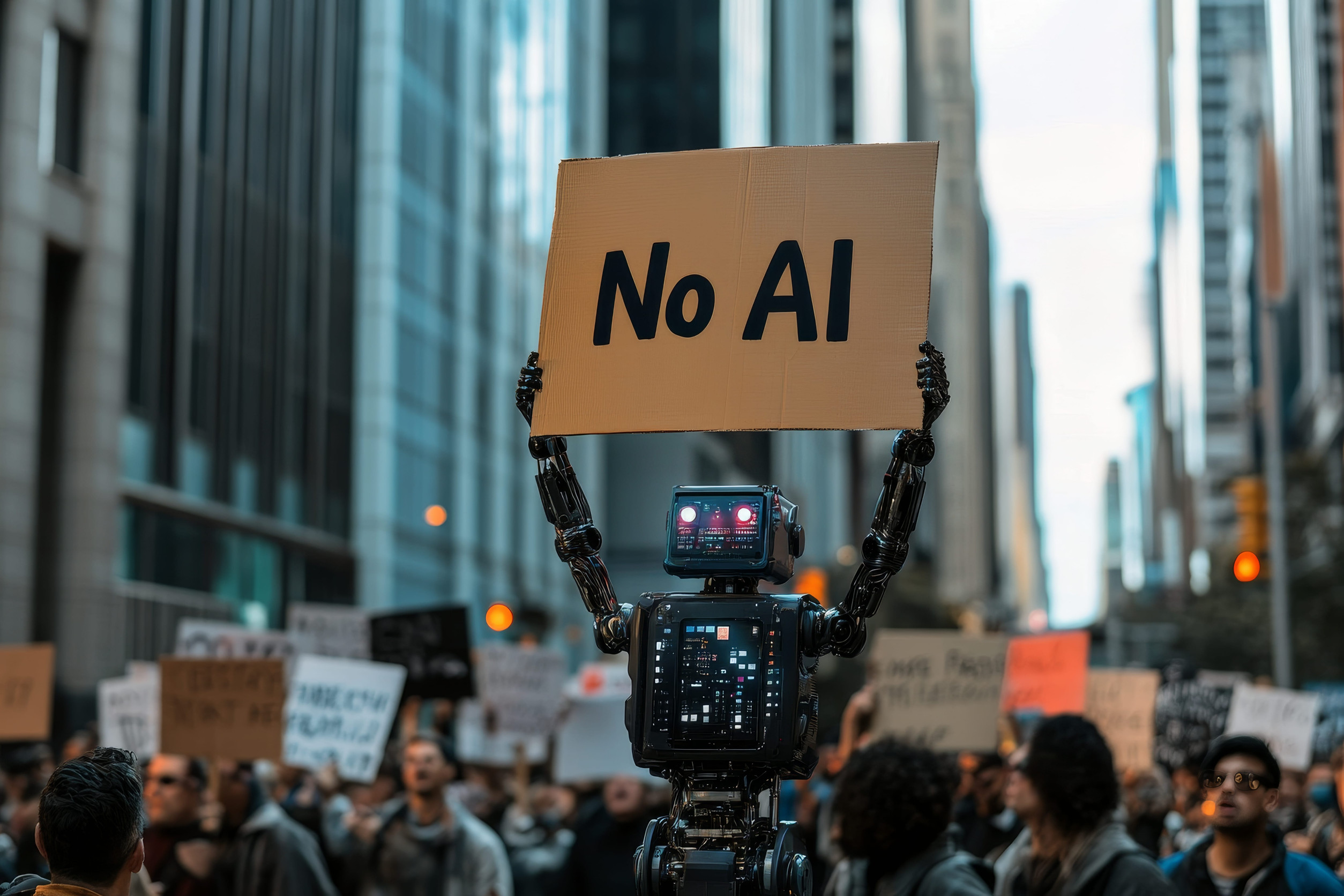
Debating policies in a rational manner requires a clear specification of the thing under consideration for regulation. The AI debate has nothing like that.
The AI debate does not even name the thing under discussion, as it is certainly not AI per se. Not being able to name the thing you are talking about is impossibly vague when it comes to policy making.
The field of AI is over 70 years old, and it has spawned a lot of different technologies, which are not part of the policy issue, so simply talking about AI is way off the mark.
Chess-playing machines that can beat grandmasters are an early example. There are now lots of AI game systems. My favorite is the blackjack program that saved me a lot of money by showing me I was no good at that gambling game.
In the late 1980s, expert systems became prominent. More recently, we got things like automated customer service systems and GPS routing systems. Now we have automated cars and military fighter drones. None of these are part of the AI policy discussion, nor are countless other AI systems in everyday use.
The AI issue mostly started with chatbots, which are typically called large language models (LLMs), so these are a good starting point. But there are lots of LLMs, some of which seem pretty harmless. The little AI summary that comes with each Google search, for example.
Plus, there are other AI systems besides LLMs that may be of concern. Examples include generative AI, diffusion models, and the interesting-sounding generative adversarial networks.
Then, too, there are AI agents that use models to perform instructed tasks. Concern about agents recently arose when a bunch started working together without being instructed to do so. We have no idea how many such systems exist.
The first thing a policy, law, or regulation must do is make clear who or what is covered and not covered. This is why regulations often have lengthy definition sections. They often create their own language in order to clearly specify the rules they state.
The AI policy debate has no such specificity. The things under discussion are not even named in many cases. As a Chinese philosopher friend of mine used to say, “We are talking in a vacuum.” Specifically, a cognitive vacuum which lacks needed substance.
Absent a clear specification of what we mean, any rules passed are likely to simply create destructive paralysis and confusion.
For example, people are talking about a pause in AI development. Which AI development? For that matter, what counts as AI development? This is another empty concept.
Let’s take Google. Last year, its R&D spending was over $60 billion. How much is AI related such that it would be paused? Some of it is labeled as AI development, but a lot of it is directly related to developments that have AI aspects, such as AI data centers.
It all depends on how AI is defined for the purposes of the pause, and there is not a shadow of a definition at this point. The potential for destructive confusion is immense. AI-related industry could run to trillions of dollars.
At the same time, there is much talk about an AI race, especially between America and China. I have yet to see this race defined or explained. Race to do what? What does winning look like? How are we doing?
It is not like there is going to be just one AI system, rendering all others obsolete. AI is a huge industrial domain with a vast number of diverse products. What then is this race?
The whole AI policy debate borders on being incoherent because we literally do not know what we are talking about. This is very dangerous because incoherent policies passed in panic can be highly destructive.