Litigation city: World Health Organization affiliate classifies gasoline as ‘carcinogenic’
An irresponsible designation, a gift to ambulance chasers, shows why the U.S. is exiting the WHO.

An irresponsible designation, a gift to ambulance chasers, shows why the U.S. is exiting the WHO.
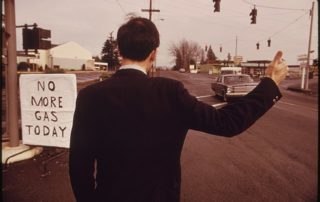
Why rob banks? "That's where the money is." Why attack energy? That's what drives the economy. Gas line during Hurricane Sandy I had to visit three gas stations today to find enough fuel to run an errand for my child and then get to a meeting. The East Coast is experiencing the kind of gas shortages today we usually only see during major hurricanes. It also reminds those of us old enough to remember, of the long lines and closed pumps we endured during the Carter-era energy crisis. A Russia-based criminal enterprise named "DarkSide" launched a cyber attack against [...]
In 2016, as part of President Obama's last budget proposal, he proposed a per barrel tax on crude oil. Analysts estimated that levy would increase retail gas prices by 25 cents or more. Whom can we trust on energy policy?
CFACT Senior Policy Advisor Paul Driessen explains why the renewable fuel standard is out of touch with today's energy realities -- the ethanol mandates, including for cellulosic ethanol -- far exceed even the perceived need. Ethanol ruins gasoline mileage, and gasoline cut with 15% ethanol ruins older automobile and truck engines (pre-2007) and almost all small gasoline-powered engines (including outboard motors, lawnmowers, and more).
Researchers have found that some buyers are willing to pay for environmentally friendly products because those products are “status symbols.” A report in The Atlantic states: “Environmentally friendly behaviors typically go unseen; there's no public glory in shortened showers or diligent recycling. But when people can use their behavior to broadcast their own goodness, their incentives shift. The people who buy Priuses and solar panels still probably care about the environment—it’s just that researchers have found that a portion of their motivation might come from a place of self-promotion, much like community service does good and fits on a résumé.” With [...]
Four years ago, President Obama scoffed at the idea of gasoline prices below $2 a gallon. Today, he both takes credit for it and wants a 20-cents-a-gallon tax to increase the price again -- all for the purpose of subsidizing inefficient, intermittent energy sources that have almost nothing to do with vehicular transportation.
There is a growing, bipartisan consensus (outside certain corn-dominant states) that it is time to end the ethanol mandate -- and definitely not to expand that mandate to include E15 fuel, which has a track record of fouling engines and engine components. Ethanol is especially hard on marine engines -- and E15 would be much worse. Meanwhile, the ethanol mandate has contributed to rising prices for food and certain consumer goods.
Just about the ONLY people in America who like electric cars are government regulators (who likely do not own them) and companies like Tesla, whose only real (sic) profits come from energy credits that add to consumer costs for other vehicles. The bugbear is the ridiculous 54.5 mpg fuel standard created by the Obama Administration with little regard for the pocketbooks of ordinary Americans. It could get worse -- the government may one day disallow the purchase of gasoline-powered vehicles.
CFACT contributor Marita Noon points out that the recent drop in crude oil prices has not been felt at the gasoline pump, largely thanks to unplanned shutdowns at numerous aging refineries that -- thanks to counterproductive government regulations -- cannot be replaced or even significantly upgraded at any reasonable cost. Indeed, the last time anyone built a new oil refinery in the U.S. was 1977.
According to CFACT advisor Marita Noon, while the U.S. oil shale boom (the result of fracking) has dramatically increased domestic oil and gas production, the Middle East is still playing a significant role both in the current drop in oil prices and down the road. ISIS is selling oil at below-market prices to willing rogue customers, and Saudi Arabia has increased its own production, even as the price of oil falls below the amount needed to sustain the Saudi economy. The Saudis are hoping to push both American and Canadian oil prices down below the cost of extraction from both shale and tar sands in hopes of slowing down or even stopping expansion of North American exploration and production.
Dave Juday points out that the Congressional Budget Office, created during the Nixon Administration to be a nonpartisan evaluator, is doing its job by reporting that with no changes to the renewable fuel standard, the price of diesel fuel will jump by 30 to 51 cents per gallon, with E10 gasoline prices rising 13 to 26 cents per gallon. The EPA has already admitted it needs to lower the biofuels requirement for 2014, but it is nearly August and no final action has been taken. This, Juday notes, frustrates policymakers, analysts, and most of all gasoline and diesel marketers. comending that the government make changes to the EPA's renewable fuel standard to reflect real-world
Tier 3 improvements would reduce monthly ozone levels by barely 0.5 part per billion (average levels) to 1.2 ppb (peak levels), ENVIRON International estimates, using EPA models. That’s equivalent to 5 to 12 cents out of $100 million! These reductions could not even have been measured by equipment existing a couple decades ago.
Why do gasoline prices remain high even when oil prices drop? Well according to economists, one of the big reasons is Washington’s ethanol policy . . .
From a social cost perspective, carbon taxes are, by nature, regressive, meaning that they inflict largest pain burdens upon low-income households. As Marlo Lewis observes, this presents a “Catch-22” dilemma for any Republicans. If on one hand, they offer to support a carbon tax in exchange for cuts in corporate or capital gains taxes, they will be accused of seeking to benefit the rich at the expense of the poor. On the other hand, any “carbon dividends” paid out to offset higher energy price burdens on poor households will create a new class of welfare dependents …a costly consequence for the general public that Democrats are much less inclined to worry about.
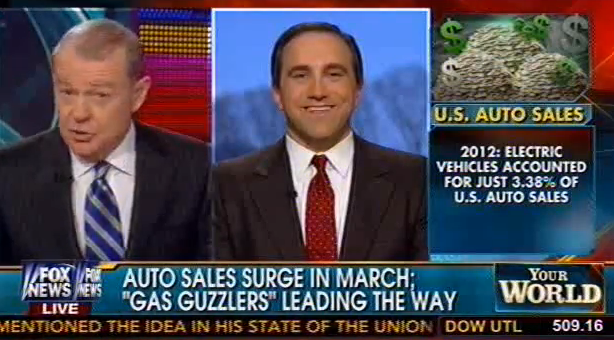
CFACT's Marc Morano, editor of Climate Depot, appeared on Fox News yesterday to discuss why trucks, SUVs, and other "gas guzzlers" are responsible for last month's surge in auto sales.