Local governments should steer clear of climate dogma
Local governments are rationing energy not related to temperature or climate change, or are uninformed of the climate/energy facts.

Local governments are rationing energy not related to temperature or climate change, or are uninformed of the climate/energy facts.

The Fauquier County Board of Supervisors is set to vote on a radical overhaul of its existing Rural Lands Comprehensive Plan that would trample on local property rights.
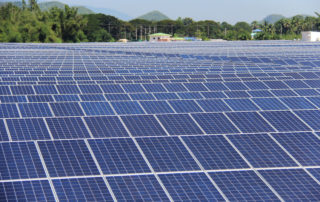
What happens when – in the name of combating climate change – gigantic, industrial-sized renewable energy projects are thrust upon unsuspecting rural communities?

By Steve Goreham The wholesale price for electricity in Virginia is about 3 cents per kilowatt-hour (kWh). The electricity produced from the two offshore turbines will receive 78 cents per kWh, or a staggering 26 times the wholesale price.

Virginia farmer Martha Boneta has reached a settlement in her $2 million lawsuit against a husband-and-wife team of realtors whom she accused of colluding with an environmental group to drive her off her land.
When we stand in our own way, we fall behind, to the delight of global rivals eager to take advantage of our self-inflicted wounds.

A radical group is boasting on the Internet that it will go beyond “legal means” to halt construction of two natural-gas pipelines.
CFACT Senior Policy Advisor Paul Driessen, a Virginia resident, laments the direction that newly elected Governor Ralph Northam is taking the people of the state -- into restrictions on carbon dioxide that include cap-and-trade emissions buying and selling -- and other foolish schemes that will harm the poor and lower middle classes the most and do little or nothing to change the Earth's climate.

Martha rose to national prominence in 2014 when legislation strengthening farmers’ rights and named after her – the “Boneta Bill” – was adopted by the Virginia General Assembly and signed into law by the governor.
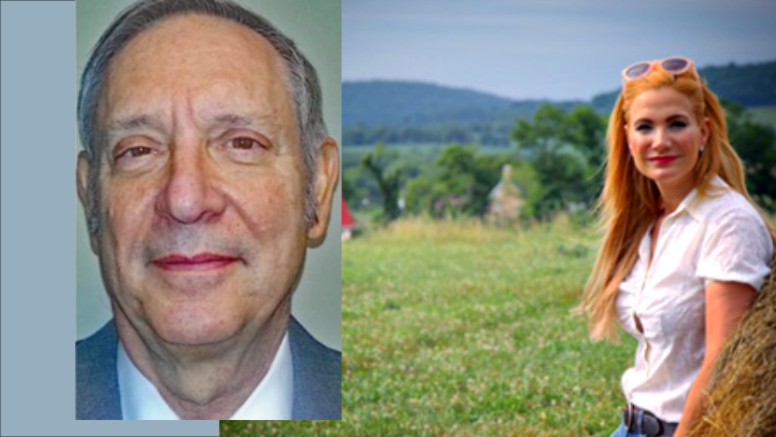
Martha Boneta: "It is my hope and prayer that no American citizen ever has to suffer the way we have on our family farm.”

They didn’t expect Virginia property owners directly affected by the pipeline to show up, advocating for their rights. The property owners’ message was simple: “Pipeline yes, eminent domain no.”
Some 500 families were relocated 80 years ago when the federal government used the Antiquities Act of 1906 to create Shenandoah National Park. Today, a private company is seeking to use eminent domain (despite having an alternate route) to destroy farmland and displace or negatively impact about 2,700 families. There is a better way.
South Carolina and Georgia blocked pipelines when companies sought to intrude on private land via eminent domain. Will Virginians revolt over the Dominion pipeline?
In a landmark decision that is as uplifting for property rights advocates as it is devastating for land trusts throughout the United States, the Virginia Supreme Court on February 12 overwhelmingly ruled in favor of a small Loudoun County winery in its multi-year battle with one of the nation’s most powerful environmental groups. By a 5-2 margin, the Virginia Supremes upheld a lower court decision that Chrysalis Vineyards’ plans to upgrade its facilities did not violate the terms of a conservation easement on the property held by Wetlands America Trust (WAT), on behalf of Ducks Unlimited (DU). The case, Wetlands America [...]

Saying their multi-year, well-documented harassment of a local farmer does not mean they “should have to be dragged through protracted, expensive litigation to battle a neighbor,” a powerful Virginia husband-and-wife real estate team has put forward a novel argument in their defense: We should not be held liable for the pain and financial loss we inflicted on our neighbor; she should suck it up because our acts were a mere “irritation and distraction.”