Clarifying the Climate Conversation at UIUC
As students passed through the University of Illinois Urbana-Champaign quad during finals week, they were met with a different perspective on climate change.
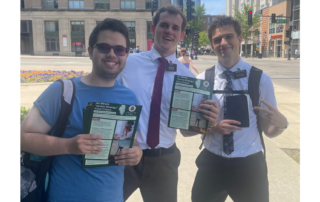
As students passed through the University of Illinois Urbana-Champaign quad during finals week, they were met with a different perspective on climate change.
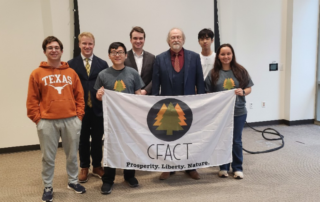
When CFACT Collegians Thien Nguyen and Tiffany Lomax set out to host energy expert Sterling Burnett on University of Texas Austin’s campus, they knew they were bringing students a perspective they rarely encounter in the classroom. The day began over lunch at a local Asian restaurant, where the CFACT Collegians sat down with Burnett and discussed the unique challenge of how to engage young people on complex energy issues. The conversation soon expanded into Burnett's work in energy policy, nonprofit advocacy, and the importance of educating the public on topics often overlooked in mainstream environmental discussions. Back on campus, students gathered [...]

WATCH NOW: CFACT Student Quizzes AZ Students on Nuclear Energy College students hear constant calls for clean energy via solar panels and wind turbines, but far fewer have ever been challenged to consider where nuclear energy fits into the conversation. At the University of Arizona, CFACT Collegian Elliott Taylor set out to test students' assumptions with a simple question and a surprising piece of data. Elliott began by asking students what they believed was the most reliable low-carbon source of energy. The answers came quickly and confidently. Nearly two-thirds of the students interviewed selected solar power as their top choice. Others [...]
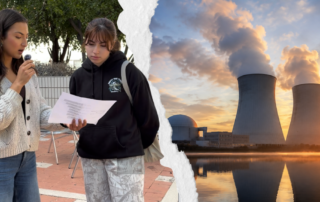
WATCH NOW: CFACT Student Quizzes AZ Students on Nuclear Energy College students hear constant calls for clean energy via solar panels and wind turbines, but far fewer have ever been challenged to consider where nuclear energy fits into the conversation. At the University of Arizona, CFACT Collegian Elliott Taylor set out to test students’ assumptions with a simple question and a surprising piece of data. Elliott began by asking students what they believed was the most reliable low-carbon source of energy. The answers came quickly and confidently. Nearly two-thirds of the students interviewed selected solar power as their top choice. Others [...]

CFACT Collegian Kaeli McIntyre brought a new kind of energy debate to Clovis Community College this semester, giving students a side-by-side look at nuclear, solar, and wind power. On February 26, Kaeli set up her “Clean Energy Face-Off” board on campus with several friends who helped draw students toward the display. The handmade board compared nuclear, solar, and wind across several key categories: whether each source is carbon emissions-free, works at night, has strong energy density, uses land efficiently, and provides reliable power around the clock. Nuclear checked off all five categories. California’s last nuclear plant still does heavy lifting. Diablo [...]
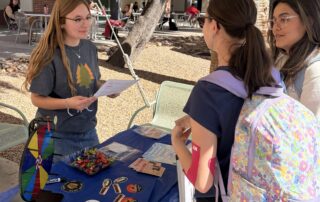
CFACT Collegians are proving once again that meaningful conversations about energy don’t have to happen in lecture halls—they can start with something as simple as a spin of the wheel and a piece of candy. At the University of Arizona, campus representative Ashlee Mendola (pictured above) brought nuclear energy education straight to the heart of campus life. Setting up on the busy mall near the student union, Ashlee invited passing students to test their knowledge with a colorful prize wheel featuring nuclear energy trivia. The concept was simple: answer a question, win some candy—but the impact ran much deeper. Ashlee reported [...]
Ms. McCarthy should base environmental policy on sound science – and check her phony justice rhetoric at the door.
The Fukushima disaster has "led to some wild speculation on the widespread dangers of Fukushima radiation on the internet... I’m here to tell you that these posts are just plain garbage. While there are terrible things that happened around the Fukushima Power Plant in Japan; Alaska, Hawaii and the West Coast aren’t in any danger. These posts were meant to scare people (and possibly written by terrified authors). They did just that, but there is a severe lack of facts in these posts. Which is why I am here to give you the facts, and nothing but the facts."
Anti-nuclear activists do not want the public to know the truth. Fukushima showed that a nuclear plant can take the maximum punch of nature’s brutality. Yet the media and the anti-nukes enjoy stoking the fear.
After Denmark (Europe's star wind energy performer), Germany boasts (sic!) the highest power costs in Europe -- Danes and Germans alike pay about 300% more than Americans for electric power that is increasingly unreliable. The Australians, who had charted a similar course, threw out their Green government. But what will Americans do?

Like a phoenix rising from ashes, nuclear power has seen a renaissance in recent years after decades of bad publicity. And while the accident at Fukushima cast an ominous shadow over its future, experts are now applying some important lessons to new designs.
Dr. Kelvin Kemm, a South African nuclear physicist and CFACT advisor, explains on Kenyan TV that Africans need to greatly increase the availability of affordable electricity and do not need Europeans telling them "No."
The headlines this week deal with the North Anna nuclear plant in Virginia and the earthquake that struck nearby. Earlier in the summer, it was the Fort Calhoun and Cooper nuclear plants in Nebraska and the encroaching Missouri River floodwaters. Before that it was Japan’s earthquake and tsunami and the Fukushima nuclear complex.
Here in the “upside down” Southern Hemisphere, we have now passed mid-winter and are heading toward summer. However, the nights will remain rather cold for another month, before we start to really feel the returning warmth of summer.
In light of the nuclear crisis in Japan, should the world abandon nuclear power for safety reasons? Dr. Kelvin Kemm, a nuclear physicist, says no, and here explains why: “The Fukushima nuclear plants are forty years old and use an outdated boiling water reactor design. . ."