
TAKE ACTION
TELL WISCONSIN: WITHDRAW FROM THE U.S. CLIMATE ALLIANCE!
In 2019, Governor Tony Evers signed Wisconsin up for the U.S. Climate Alliance: a club of Democrat Governors committed to Paris Accord targets no matter what Washington, D.C. decides. Five years later, he became the first Midwest Governor to join the Alliance’s executive committee.
This isn’t a fringe idea anymore. It’s the same “net zero by 2050” agenda national Democrats are promising to bring back to Congress if voters hand them the majority this November, and Wisconsin is already living under a state-level version of it.
An independent study found that “commitment” costs Wisconsin $111 billion – roughly $23,400 out of every adult’s pocket in the state. And Governor Evers isn’t running for re-election in 2026, so he’ll never have to answer to Wisconsin voters for a dime of it.
We’re not asking Wisconsin to give up a clean lake or a healthy forest. We’re asking it to give up a Democrat Governors’ club built to impose an agenda Wisconsin voters never approved. Add your name below!
Wisconsin’s Net-Zero Transition Comes With a $111 Billion Price Tag
Wisconsin’s newly released Emissions Reduction Roadmap lays out an aggressive vision for reducing greenhouse gas emissions across the state. At its core, it is a net-zero plan that details in 78 pages how they plan to spend YOUR tax dollars. The plan calls for expanded wind, solar, and energy storage; building electrification; electric-vehicle infrastructure; industrial decarbonization; and other measures aimed at moving Wisconsin away from fossil fuels. These are all moves that would not only cost WI more but would reduce affordability and reliability- two key points that green eco-socialists forget about.
The Roadmap itself does not provide taxpayers with a total price tag. In fact, the state acknowledges that many implementation details will depend on future programs and funding opportunities. This means the actual cost will likely be even higher.
However, Wisconsin’s transition to a net-zero economy has been modeled before — and the estimated investment is enormous.
In 2022, RENEW Wisconsin, Clean Wisconsin and GridLab worked with Evolved Energy Research to examine pathways for Wisconsin to achieve 100% clean electricity and economy-wide net-zero emissions by 2050. The study modeled many of the same major changes now advanced in Wisconsin’s 2026 Roadmap, including widespread electrification of transportation and buildings and a massive expansion of renewable generation, storage and transmission.
According to RENEW Wisconsin’s own description of the results, economy-wide investments in renewable energy, heat pumps, electric vehicles and other technologies increase by approximately $111.1 billion in present value under the modeled net-zero scenario.
That is not CFACT’s estimate. It comes directly from the organizations advocating for Wisconsin’s transition to net-zero.
The scale of the modeled transformation is substantial. By 2050, the net-zero scenario envisions approximately 31 gigawatts of solar, 21 gigawatts of wind and 7 gigawatts of energy storage in Wisconsin, together with major transmission expansion. Evolved Energy Research estimates that electrification of transportation, buildings and other sectors would cause Wisconsin’s electric load to grow by 166 percent. Remember, this was all before AI data centers were even on the map. The load has increased significantly more already.
Wisconsin’s new Roadmap follows a similar policy direction. It supports wind, solar, storage and geothermal installations; calls for electrifying homes and buildings with heat pumps and electric appliances; and promotes EV infrastructure, medium- and heavy-duty vehicle electrification and public-transit electrification.
For perspective, Wisconsin has roughly 4.75 million adult residents using current Census population estimates. Dividing $111.1 billion by that population produces an investment equivalent of approximately $23,400 per Wisconsin adult. This does not mean that every Wisconsin adult would personally receive a $23,400 bill; it illustrates the scale of the modeled economy-wide investment. The Census Bureau estimates Wisconsin’s 2025 population at 5,972,787, with about 20.5 percent under age 18.
Wisconsin families deserve an honest debate about both the promised benefits and the enormous investment required to transform the state’s energy, transportation, and building systems.
Before committing Wisconsin to this path, policymakers should answer a simple question:
Who ultimately pays the $111 billion? You and I both know it’s the taxpayers who are left holding the bag.
LATEST NEWS
It’s another sad blow to what once was the world’s largest renewable energy proposal
The owners have downgraded the 26GW venture back to a 15GW.
Nuclear waste storage ….. no big deal
Nuclear waste is better handled than any other waste in the world.
The Ark-La-Tex may be leading America’s lithium race
The discovery of vast lithium resources in southern Arkansas, extending far into northern Louisiana and across northeast Texas, has sparked widespread interest.
Foreign lawfare threatens Transatlantic energy security
BY MAJOR GENERAL BOB DEES: The lesson from Europe is that a nation unable to secure dependable energy becomes vulnerable to those that control it.

Permitting gridlock is crippling America’s energy startups
BY JESPER JOLMA: Complex permitting rules slows down American ingenuity and discourages investment.
The “Transitioning Away from Fossil Fuels” project has become a global program
It will certainly be worth watching as countries struggle to map their way to an impossible future.

No, MIT, ‘clean energy’ isn’t the future — nor is it actually clean
Not-so-clean, weather-dependent energy sources will never be more than bit players in today’s fast-moving, technology-driven industrial revolution.
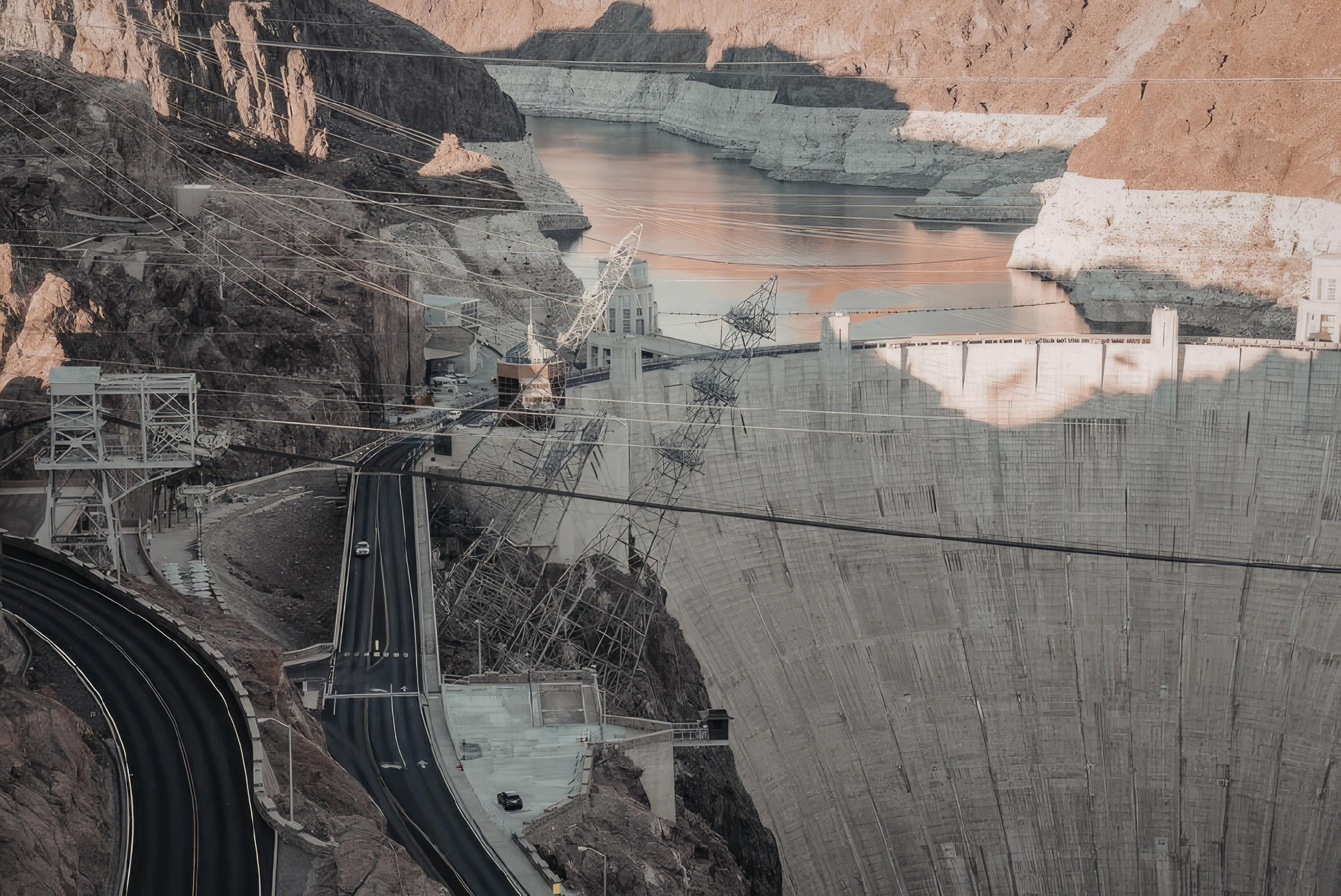
Western water fight also impacts power generation
Demand for water in the desert appears insatiable. What will happen next?
Big Green steps on Wisconsin communities to impose unwanted wind and solar
A "Right of First Refusal" law would award incumbent utility companies a project without having to go through the competitive bidding process.

A Texas-size clash over massive transmission-line project
As Americans grapple with the stark realities of soaring AI-driven energy demand, Texas — of all places — is seriously considering a scheme to transmit electricity across the state that is worthy of California at its most dysfunctional.
Trump’s race to launch nuclear microreactors changes everything
An Australian led team built one in just 150 days.

China’s great wall of fossil fuels
PAUL H. TICE: China's aggregate consumption of coal, crude oil, and natural gas has jumped nearly sixfold since 1985 — including a 27% increase over the past decade — and shows no sign of peaking.